
REVIEW · WALKING TOURS
Valencia: Essentials and World Heritages Sites Walking Tour
Valencia feels like a city you can read if someone shows you where to look. This 2-hour walking tour is a fast, practical way to get oriented in the old center while you learn the stories behind Valencia’s three UNESCO World Heritage sites. I especially like how the walk combines real entries at the Lonja de la Seda and Valencia City Hall with explanations you can carry into the rest of your trip. My other favorite part is the bilingual local guide approach, with guides like Gabor, Maria, Sara, and Sofi guiding with clear English and plenty of time for questions. One thing to consider: it is a tight time window, so you will want to be ready for a whirlwind of highlights rather than a slow, stop-and-stare museum day.
You’ll start near the main station area, then move through the historic core, building a mental map from the moment you arrive. The format works well because it links today’s Valencia to older layers, including how trade, water, and seasonal tradition shape what you see in the streets. Still, it’s worth knowing that City Hall access depends on working days and that Lonja de la Seda can close for events, with alternatives arranged if that happens.
Key highlights
- Lonja de la Seda entry included, so you can see the Silk Exchange up close rather than just hear about it
- City Hall visit included when it’s open for public visits
- Three UNESCO stories connected: Silk Exchange, Tribunal de las Aguas, and Fallas
- Guides like Gabor, Maria, Sara, and Sofi often turn the route into a question-friendly conversation
- An easy-going pace that many people describe as not too far between stops
- Plan B if Lonja is closed, with options to re-enter later or swap for a similar-value site
Valencia in two hours: a smart old-town sampler
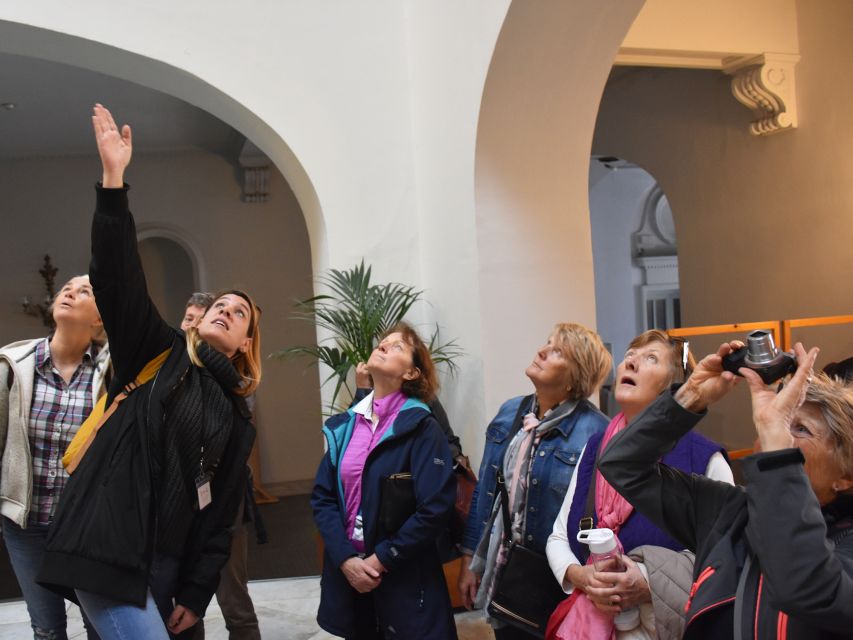
This tour is built for people who want the big hits without losing half a day to transit and planning. You meet at the Tourism Hub at Estación del Norte (north station), then you walk into the historic core. In other words, you start where you likely arrive, not where you have to think about getting there first.
What I like most about the pacing is that it doesn’t feel like a fitness test. Many guides keep distances short and choose good spots to pause, including shaded areas when weather is warm. That makes a difference in Valencia, where you can step from sun to cool stone and back again fast. You also get a steady flow of context, so plazas, monuments, and architecture stop being random shapes and start being clues.
A practical note, though. Two hours means you won’t get ultra-deep coverage of everything. You’re not here to master every detail of Valencian history. You’re here to build the “first draft” of understanding, so the rest of your sightseeing becomes easier and more meaningful.
UNESCO World Heritage in one walk: what you’ll actually learn
Valencia has three UNESCO World Heritage properties, and this tour treats them like a connected story, not three separate bullet points.
First up is the Lonja de la Seda (Silk Exchange), a building tied to commerce and the confidence of a trading city. Then there’s the Tribunal de las Aguas, a tradition rooted in water management and community rules that have been practiced for centuries. Finally, there are the Fallas, the annual festival famous for fire and spectacle, but also for the creativity and community identity behind the temporary art.
What makes this setup valuable is how it trains your eye. After the tour, you’ll likely notice that Valencia doesn’t just preserve history in the past tense. It keeps using certain institutions and cultural habits as part of daily life. You’ll get better at spotting why something matters, even when you’re just passing by it later.
And yes, if you care about UNESCO stamps, this is efficient. Few places can offer three different UNESCO-linked experiences in a compact, walkable center. Just remember it’s still a walk. If you want extra time inside every site you see, plan to add self-guided time afterward.
The rest of Valencia, one booking at a time
- Valencia: Oceanogràfic Entry Ticket
★ 4.7 · 9,893 reviews - Valencia: 24 or 48-Hour Hop-on Hop-off Bus Ticket
★ 3.9 · 5,611 reviews - Valencia: Palosanto Flamenco Show Ticket
★ 4.8 · 3,876 reviews - Valencia: Catamaran Cruise with Sunset Option
★ 4.0 · 3,566 reviews
Lonja de la Seda: walk into the city’s trading brain
The best way to understand the Silk Exchange is to see it in person, and this tour includes an entrance fee for Lonja de la Seda (when it’s open). This is the moment where Valencia’s history turns from stories into architecture.
When you enter, you’re stepping into a place designed for business, but with craftsmanship that feels almost like a public performance. The guide’s job here is to help you link the building’s purpose to its visual language. You’ll also learn enough context to make sense of what you’re looking at, rather than wandering through with no idea why the space feels so deliberate.
One of the most practical benefits: your ticket is handled as part of the tour. That matters because the Lonja can have closures or special events.
If Lonja is closed during your visit, you’ll have options. The operator can send your tickets so you can enter later in the afternoon on your own, or they may exchange your tickets for another museum or monument of the same value. That kind of backup is worth paying attention to, because it protects your day from turning into a disappointment.
City Hall on working days: Valencia’s civic side, not just monuments
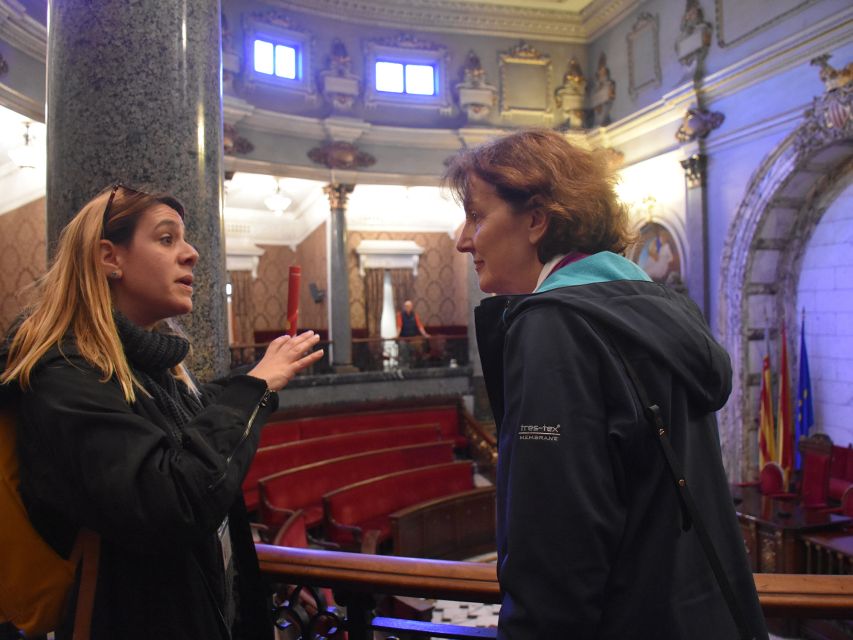
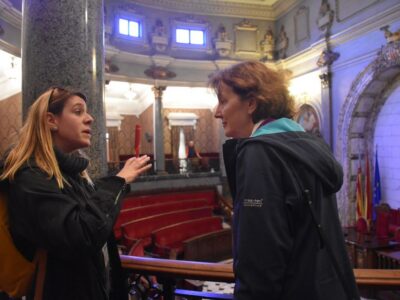
Many city walks focus on cathedrals and squares. This one adds a civic stop, Valencia City Hall, and includes an entrance fee when access is available. The key detail to know is that the City Hall guided portion runs on working days, except when an official event is taking place.
Why I think this is a smart add-on: it gives you contrast. After seeing the trade-minded Lonja, City Hall brings you back to Valencia’s systems, institutions, and public life. You’ll start understanding the city not only as an art and architecture destination, but as a place that organizes people and decisions.
This also helps your later sightseeing. When you walk past administrative buildings, markets, or cultural venues, you’ll be more likely to ask the right questions like who runs it, why it looks the way it does, and how it evolved.
If you’re planning your trip, a working-day slot for this tour can make the City Hall stop smoother. If your dates are tight and you land on a non-working day, expect the tour to adjust around access rules.
Tribunal de las Aguas: the living water rule you can’t fake
The Tribunal de las Aguas is one of those UNESCO stories that feels very “of Valencia.” It’s not a building you treat like a backdrop. It’s a tradition tied to how water is managed and how communities settle disputes.
On this tour, you won’t just memorize a definition. You’ll get the context that makes the Tribunal make sense in your head. The guide’s explanations connect it to the city’s geography and to the older rhythms that still influence modern life.
What you can do with this information after the walk is the real payoff. Later, when you see irrigation infrastructure, fountains, or even just the way neighborhoods relate to water, you’ll understand that water isn’t only about scenery. In Valencia, it has rules, history, and a social role.
If you love human-scale stories, not just stone monuments, this is the UNESCO stop you’ll remember longest.
Fallas in context: why a festival is UNESCO culture

Fallas can look like just fireworks and street spectacle from a distance. This tour gives you the context to see it as something deeper and more structured: Fallas as cultural expression recognized at the UNESCO level.
You’ll learn how the festival works as an annual creative cycle, including how ephemeral art, fire, and fireworks connect to identity and community. That phrase matters because the key idea is temporary. The whole thing is designed to be short-lived, which makes it even more meaningful when you understand the system behind it.
What I like about this inclusion is timing. Even if you’re not visiting during Fallas season, you get the “why” before you ever see a documentary, a poster, or a reenactment later. Then, when you walk past reminders of the tradition in the city, you can tell the difference between decoration and meaning.
Practical tip for your photos: when you’re walking, don’t stop every time you see an interesting facade. Save extra picture time for the Lonja interior and any bigger plaza moments your guide points out during pauses.
More of Valencia on foot
The walking route: pace, stops, and where you end up
This tour is designed so you can get your bearings quickly. Reviews often describe it as a manageable walk with minimal walking overall, plus a guide who finds spots to rest when needed.
A typical flow includes:
- Starting at Estación del Norte (Tourism Hub, West Tower on the ground floor)
- Moving through main squares and central areas of the old town
- Visiting Valencia City Hall (when open for public visits)
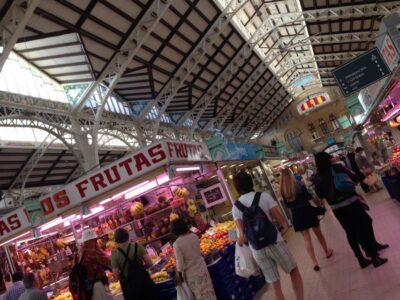
- Including major historic sights along the way, with some tours also stopping around places like the central market area
- Entering Lonja de la Seda
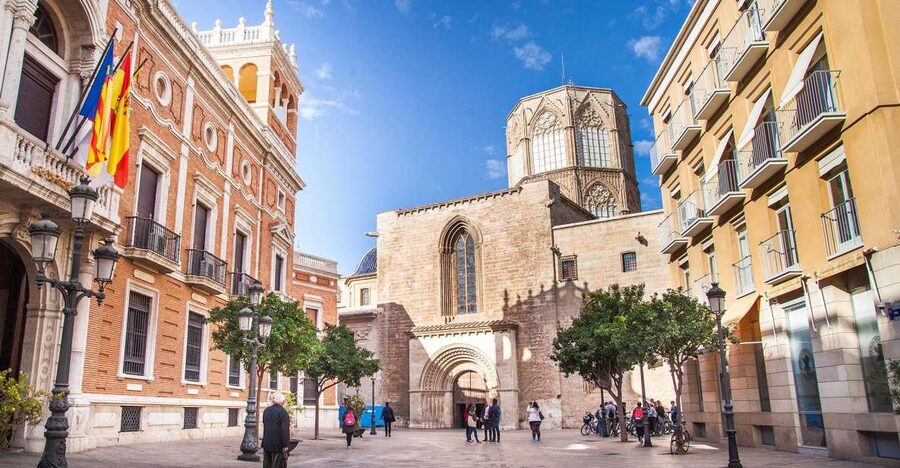
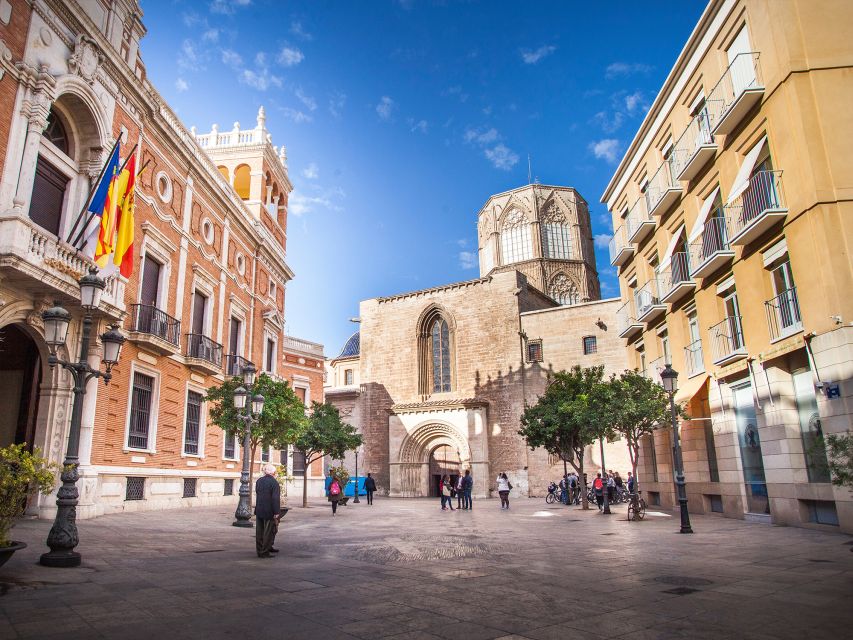
- Finishing near the cathedral area for an easy next step
I like that ending point because it helps you keep momentum. If you want to continue exploring after the tour, you’re already near one of the strongest landmarks in the city.
Who is this best for? If you’re visiting Valencia for the first time, you want something efficient that doesn’t require a lot of homework. It also suits groups of mixed ages, based on how many people describe the walking distance and pace.
If you’re the type who hates group tours, you might want to pair this with a later self-guided afternoon. But if you enjoy learning on foot, this is a great starting move.
Guides make the difference, and you get that here
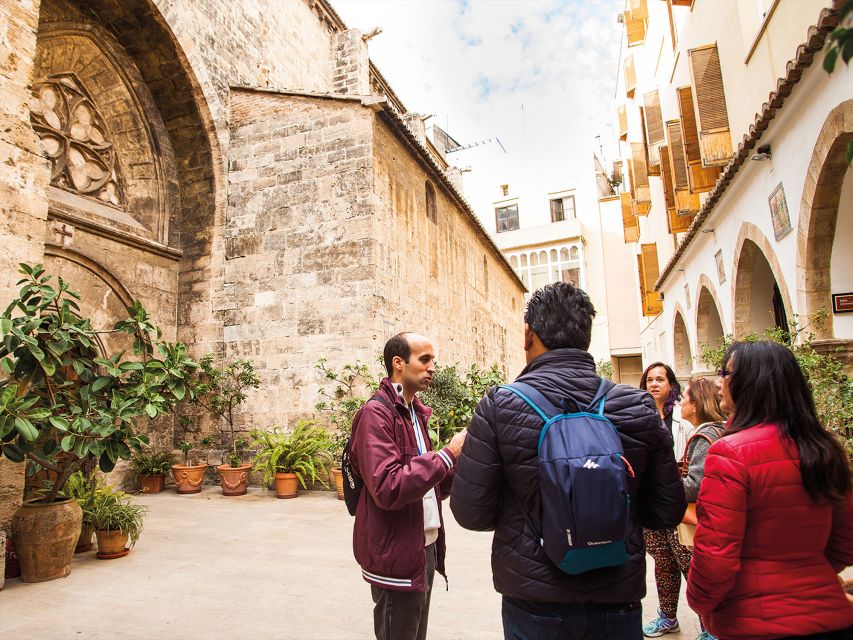
A lot of walking tours are just scripted recitations. This one tends to feel more like a conversation, with bilingual local guides who explain clearly and answer questions as you go.
Names I saw repeatedly in confirmations include Gabor, Maria, Sara, Sofi, Belen, and Carlos. Different guides, same pattern: friendly interaction, clear English, and a focus on making the city make sense.
One small but telling detail from firsthand accounts: some guides also help with practical decisions, like what to do next after the tour and where to eat. That can be useful in Valencia, because the city has a lot of options and it’s easy to end up at an expensive spot that doesn’t taste like the real thing.
If you do one thing to get the most value, ask your guide what to prioritize based on your interests. If you tell them you love architecture, you’ll likely get more structure-focused explanations. If you care about culture and festivals, you’ll get the Fallas story in a way that sticks.
Price and value: is $21 a good deal?
At $21 per person for about 2 hours, this is priced like a budget-friendly orientation tour. But the value comes from what’s included: entrance fees for Lonja de la Seda and Valencia City Hall (depending on opening), plus a professional guide.
So you’re not just paying for walking and talking. You’re paying for access and interpretation. In a city like Valencia, where top sights can cost extra, that inclusion matters.
Also, the tour is structured around themes that set up your next day. Once you understand the UNESCO-linked logic of trade, water, and cultural ritual, the rest of the old town feels less random. That is why I think people rate it highly overall, because it feels like money spent on understanding, not just ticking boxes.
Should you book this walking tour of Valencia?
I’d book it if:
- You have limited time and want a strong overview fast
- You want entry into Lonja de la Seda and you like guided context
- You care about UNESCO, but you also want the human story behind it
- You’re visiting for the first time and want help getting oriented
I’d think twice if:
- You hate group pacing and want slow, unscripted wandering
- You plan to spend the entire day inside museums, since this is more of a curated sampler
- You’re extremely focused on one single site, because the tour spreads attention across several key experiences
If you can do a working day slot for City Hall, that’s a bonus. And if you’re hoping to see Lonja during your visit, remember there’s an alternate plan if it’s closed for events.
Overall, this tour is one of the smartest ways to start Valencia: short enough to fit into any schedule, structured enough to teach you how the city works, and practical enough that you won’t leave with only photos.
FAQ
How long is the Valencia essentials and World Heritages Sites walking tour?
It lasts 2 hours.
Where is the meeting point for the tour?
Meet at the Tourism Hub at Estación del Norte (north station of the main railway station) in Valencia, West Tower, ground floor, Carrer de Xàtiva, 24. The metro station is Xàtiva.
What language is the tour guide?
The tour guide provides live interpretation in English.
What is included in the tour price?
Entrance fees to the Lonja de la Seda (Silk Exchange) and the City Hall are included according to opening, plus the tour guide.
Does the tour include the Silk Exchange entrance every time?
The entrance fee is included according to monument opening. If the Silk Exchange is closed due to an event during your visit, the operator offers a solution (tickets for afternoon entry or an exchange for another museum or monument of the same amount).
Are City Hall visits included on every day of the week?
The guided tour of the City Hall is on working days, except if an official event is taking place.
Is the tour wheelchair accessible?
Yes, the tour is wheelchair accessible.
Can I cancel for a full refund?
Yes. You can cancel up to 24 hours in advance for a full refund.
Can I change the language group after booking?
If you want to change to a different language group, it depends on availability and has an extra cost of 5€ per person.
More Tours in Valencia





More Tour Reviews in Valencia





More Valencia, Booked and Rated
Newest Valencia write-ups


Walking Tours, side by side.
 ★ 4.6Historical Walking TourFrom $17390 reviews
 ★ 4.9City Walking Tour with Top Attractions – ITALIANFrom $17242 reviews
 ★ 5.0Valencia Private Walking Tour with Official Valencian GuideFrom $127176 reviews
 ★ 4.5The 10 Tastings of Valencia With Locals: Private Food Walking TourFrom $152119 reviews
 ★ 4.9Private 4-Hour Walking Tour of the Old TownFrom $39454 reviews
 ★ 5.0Valencia guided tours – walking tours –From $21644 reviews
 ★ 4.2Alicante: Private Custom Walking TourFrom $5339 reviews
 ★ 4.7Alicante: Guided City Highlights Walking TourFrom $3231 reviews
Filed in