
REVIEW · HISTORICAL TOURS
Games and History Walking Tour in the Center of Valencia
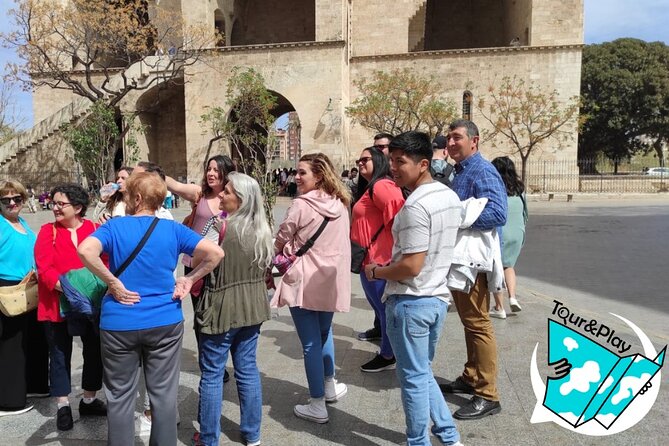
Valencia is best understood by walking, not scrolling. This 3-hour Games and History walk threads key landmarks in the city center through little challenges and group tasks, so you remember what you’re seeing. I like that it stays mostly outside, which keeps the pace steady and makes the route feel like a real stroll through Valencia’s older streets.
Two things I especially liked: the badge-and-challenge format turns you into an active participant, and the pacing fits a short visit without turning into a marathon. One name that stood out from past tours is guide Alba, and her approach is detailed, clear, and focused on how the city changed over time.
One possible drawback is that some of the most famous interiors are optional, not included. That means you’ll decide on the spot whether you want to spend a little extra time and money, like at the Lonja de la Seda or the cathedral options.
Key highlights you will feel on the walk
- Badge rewards: you collect small wins along the route and trade them for a final surprise at the end
- Mostly outside, flexible inside: explanations happen outdoors, with optional extra visits (paid at the door)
- A tour built around facades: you practice noticing messages, symbols, and details on building fronts
- Market and exchange stops: you get the architecture and the atmosphere, plus a short challenge to explore stalls
- Old Valencia to the river finale: you end at Torres de Serranos with a classic view by the Turia River
A games-first way to learn Valencia’s center

This walk is designed for people who like learning that feels practical. You’re not just standing in front of a monument for facts to bounce off your brain. Instead, you solve mini tasks, interact with the group, and pay attention to details that you would normally miss, like symbols on a facade or how the space around a square has changed.
It’s also smart that the route is mostly outdoor. You get fresh air and real sightlines, and you avoid time traps where half the group stalls in ticket lines. That said, the tour still offers the option to step inside at a couple of places if your group wants it, so you can choose between a quicker route and a slightly deeper one.
The tour runs in English and keeps the group small, with a maximum of 20 travelers. That size matters. You’re more likely to stay with the guide, hear what’s being pointed out, and actually participate in the challenges.
Finally, you’ll use a mobile ticket, which is convenient. It also means you can focus on finding the meeting point rather than hunting for printed paperwork.
Plaza De Toro to Estacio del Nord, where the clues start
You kick off near the start point at Passatge Doctor Serra & Carrer de Xàtiva, and the first landmark takes you straight to one of Valencia’s big emblem monuments: Plaza De Toro.
At this bullring, you’ll notice how the building communicates without needing to go inside. The explanations and activities happen outside, and interior access is only possible if there’s a specific event. Admission is not included, so you’re there for the story, symbols, and street-level context, not a paid interior visit.
From there, you head to Estacio del Nord. This is where the tour shifts into “decode mode.” The facade hides messages and stories, and you’ll tackle your first real challenge of the route. The best part: Estacio del Nord also offers free access, and there’s an opportunity to see the interior as part of the experience, not just the exterior.
Why this works: a bullring and a train station feel like they belong to different worlds, but both are public spaces shaped by what a city wants to show off. You learn to connect architecture to daily life, not just to famous dates.
The rest of Valencia, one booking at a time
- Valencia: Oceanogràfic Entry Ticket
★ 4.7 · 9,893 reviews - Valencia: 24 or 48-Hour Hop-on Hop-off Bus Ticket
★ 3.9 · 5,611 reviews - Valencia: Palosanto Flamenco Show Ticket
★ 4.8 · 3,876 reviews - Valencia: Catamaran Cruise with Sunset Option
★ 4.0 · 3,566 reviews
Town Hall plaza and old mail, a badge hunt through everyday icons
Next comes Placa de L’ajuntament, the Plaza del Ayuntamiento. This area is described as constantly changing, and that makes sense once you’re there. It’s civic space, a meeting spot, and a place where you see the modern city’s rhythm layered over older walls and streets.
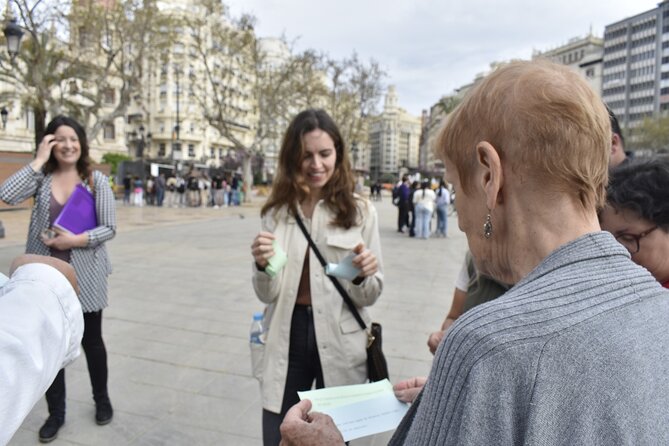
Here, the tour keeps you moving with a group challenge. The goal is to interact with the whole group and earn badge wins. It sounds playful, but it’s also a memory tool. When you’re solving something together, you don’t just hear about the city hall and neighborhood energy, you feel how the space operates.
A few minutes later you reach Edificio de Correos y Telegrafos, the postal and telegraph building right in front of the Ayuntamiento plaza area. The focus is again outside, with explanations and activities happening outdoors. Admission is not included, so treat this stop as a photo-and-details moment, not an indoor museum break.
This section is valuable because it shows how Valencia’s center works on a normal day. Squares like this are where the city’s identity shows up in real time, and the challenges make you pay attention to layout and movement instead of just admiring stone.
Mercat Central and La Lonja: architecture you can feel, plus optional entries
You then reach Mercat Central de Valencia, and this stop is one of the best blends of learning and atmosphere. You’ll explore the architecture and history and then soak up the market vibe inside. The tour adds a short time-trial style challenge that pushes you to move between stalls and familiarize yourself with the products on offer.
This is practical. Markets are hard to understand if you only glance at them. When you have a reason to check out different areas, you start noticing how stalls are arranged, what gets sold in the center, and how the market feels when people are actually buying things.
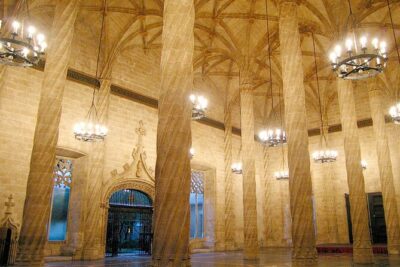
After the market, you arrive at La Lonja de la Seda, the Silk Exchange, a Golden Age landmark. The exterior commentary focuses on sins and vices hidden in the facade, which is a fun way to teach symbolism without turning it into a lecture.
There’s also an optional indoor visit. You can stop and visit inside for an extra 2 euros paid at the door. If you’re visiting on Sundays and holidays, admission to this site is free, according to the tour info.
Why I think this is worth planning: you get the core message about the building’s symbolism from the outside either way. If you have time and your group wants more, the paid interior option lets you add depth without forcing it on everyone.
Santos Juanes, a hidden round plaza, and the Reina square pause
The tour continues to Iglesia de los Santos Juanes. This stop leans into old customs, including some that aren’t the nicest to remember, but the point is to help you visualize how Valencia lived in the past. You’ll get a theme tied to the guide’s playful bird reference, which is used to connect you emotionally to what you’re seeing, not just what you’re hearing.
Then you slip into Plaza Redonda, described as a hidden square with changes over time. This is a relief after big stops. It’s quieter, small enough to reset your feet, and it helps you understand how Valencia keeps evolving while still protecting little pockets of identity.
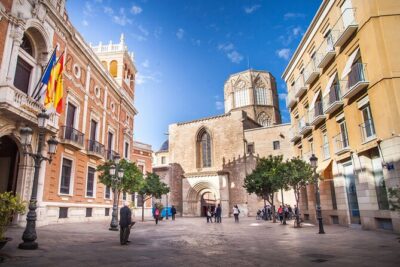
Next is Placa de la Reina. Here you’ll figure out which queen the square is dedicated to and how the surroundings look different compared to earlier centuries. You also get a rest break on benches, with a view toward the Cathedral and bell tower, which is a smart pacing move before the main cathedral section.
This trio of stops matters because it teaches you how Valencia layers meaning. Churches, side squares, and small plazas all contribute to the bigger story, but each one does it in a different tone.
Valencia Cathedral: outside storytelling with optional Micalet and interior access
When the tour reaches Valencia Cathedral, it focuses on the exterior and the parts you can understand quickly from the street. You’ll learn about the Baroque main façade, get key info about El Micalet bell tower, and be surprised by the cultural weight of the Gothic side door.
Explanations and activities are outside, but the tour is flexible. If your group wants to go further, you can add two optional paid choices at the door:
- 2 euros to climb the bell tower
- 5.50 euros to see the cathedral interior
That flexibility is a nice compromise for mixed groups. If you’re tired, you stay outside and still get a strong orientation. If you’re energized and want views and interior context, you can spend extra time and money.
Even if you skip the paid options, this stop gives you a strong mental map. After this, the rest of the route makes more sense because you understand where the key power center of the city sits, both visually and symbolically.
More of Valencia on foot
Plaza de la Virgen to Almoina: where Valencia’s oldest layers show up
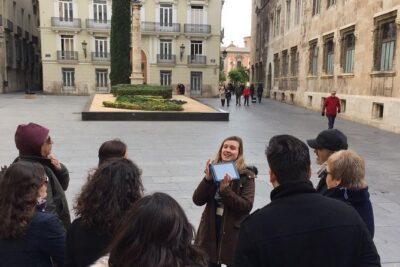
Next comes Plaza de la Virgen. You’ll learn about an ancient institution declared a World Heritage Site, plus how the Virgin connects with Valencia’s Fallas tradition. You’ll also explore the fountain in the square and solve another challenge on the route, linked to what the fountain tells you.
This is another “active learning” moment. When you have to decipher something, you pay attention to shape, placement, and meaning. It’s also a useful bridge from the big monument storytelling into the local tradition storytelling.
From there you reach Almoina Archaeological Center, where you’ll admire remains of Roman Valencia and learn about its founding and the first people said to occupy the area. The time at this stop depends on the group and can be shortened or even passed quickly if you’re pressed for time.
That flexibility is important. Roman ruins can be fascinating, but not everyone wants to spend a long chunk indoors or in a controlled space. If your group moves quickly, this stop can still give you the key idea: Valencia wasn’t built from scratch. It was layered.
Serranos walls and the Turia River photo finish
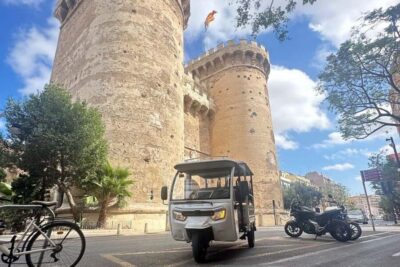
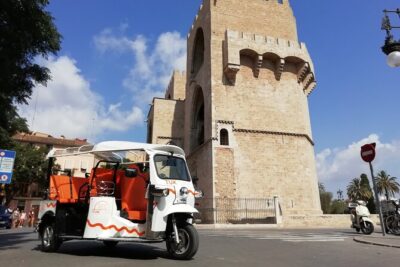
The final stretches bring you to Torres de Serrans. This is where the tour shifts into a “wrap-up” mode. You’ll learn about the walls and how the towers changed function over time. Then you tally up the badges you collected from earlier games and challenges.
There’s also a surprise at the end, tied to completing the experience. You don’t have to solve it alone either. This is the moment where the group energy matters, because the final task is built to make you collaborate rather than compete.
The tour ends at Pont dels Serrans, with a goodbye in front of the Serrano Towers on the other side near the river. You’ll take a group photo with one of the most emblematic views of the city and learn a little about the Turia River and why it matters to Valencia.
If you want one last memory to carry home, this is it. You finish with open space and an obvious landmark, not another cramped interior.
Price and value: what $48.06 gets you in 3 hours
At $48.06 per person for about 3 hours, this tour lands in the midrange for a paid walking experience in a major European city. The value comes from three parts that are hard to replicate on your own:
- Guided interpretation that turns facade details into usable stories
- A structured route that connects civic, religious, commercial, and defensive architecture
- The game format, including small rewards that add up to a final surprise
Also, several stops include free admission, and the tour is built to keep paid time optional. For example, Estacio del Nord and Mercat Central are included as free stops, and so are many plaza and church exterior segments. Paid extras are limited to the optional items like La Lonja interior (2 euros at the door) and cathedral options (2 euros for bell tower climb, 5.50 euros for cathedral interior).
One practical thought: if you plan to add both Lonja and cathedral options, your total cost rises. If you only take the exterior versions, you keep the experience close to the ticket price and still get a full route.
What to expect on the ground: pace, language, and where you start
This is a walking tour with outdoor explanations and short stops. The timing for each segment is listed as around 5 to 15 minutes at many stops. That matters because it shapes the pace. You’ll be moving often, but the route is broken into digestible chunks.
You’ll meet at Passatge Doctor Serra & Carrer de Xàtiva and finish near Torres de Serranos in the park by the Turia River. That start and end matter for planning your day. It’s an easy route to pair with a meal afterward near the old center and a bit of extra time along the river.
The tour is offered in English and uses a mobile ticket. The group size is capped at 20 travelers, which helps keep interaction and challenge participation realistic. Service animals are allowed, and the experience notes that most travelers can participate.
One more tip: because the tour requires good weather, have a backup plan in your schedule. If rain hits, you’ll likely want flexibility.
Who should book this, and who might want a different style
I’d recommend this tour if you:
- Like city history but get bored by long lectures
- Enjoy game-like interactions and group problem-solving
- Want a route that hits major Valencia landmarks in about half a day
- Prefer guided direction on what to notice on building exteriors
I might suggest skipping or comparing alternatives if you:
- Want only museums and interiors with no exterior stops
- Don’t like challenge formats or feel pressured to participate
- Are arriving expecting paid entry at every major site, because several are exterior and optional indoors cost extra
FAQ
How long is the Games and History walking tour in Valencia?
It lasts about 3 hours.
What is the price per person?
The price is listed as $48.06 per person.
Is the tour offered in English?
Yes, it is offered in English.
Do I need a printed ticket?
No. You’ll use a mobile ticket.
Is the tour mostly outdoors?
Yes. Explanations and activities mainly happen outside. There are optional interior visits.
Are entrance tickets included?
Some are included and some are not. For example, several stops are free, while others like the bullring, certain exterior-only sites, and optional paid entries are not included.
What optional entrances cost extra?
The optional Lonja de la Seda visit costs 2 euros at the door. Optional cathedral access includes 2 euros to climb the Micalet bell tower and 5.50 euros to see the cathedral interior, with both paid at the door.
When is La Lonja free?
Admission to the Lonja de la Seda is free on Sundays and holidays, according to the tour details.
Can I cancel for a full refund?
Yes, you can cancel up to 24 hours in advance for a full refund.
Should you book this Valencia games-and-history walk?
Yes, if you want a guided way to learn Valencia’s center without turning it into a museum day. The best part is the structure: the badges and group challenges push you to notice real details on facades and in squares, and the route ties civic, religious, commercial, and defensive landmarks into one clear path. If you’re the type who remembers cities through walking and doing small tasks, you’ll probably love this format.
More Tours in Valencia





More Tour Reviews in Valencia





More Valencia, Booked and Rated
Newest Valencia write-ups


Historical Tours, side by side.
 ★ 5.0Valencia Old Town Tour with Wine & Tapas in 11th Century Historic MonumentFrom $963,234 reviews
 ★ 4.6Historical Walking TourFrom $17390 reviews
 ★ 4.5Essentials of Valencia and its World Heritage SitesFrom $20350 reviews
 ★ 5.0Valencia’s Greatest Food, History & Culture TourFrom $114129 reviews
 ★ 5.0Essential Valencia and World Heritage Sites (English)From $12188 reviews
 ★ 4.8Historical Tour by Tuk Tuk 1HFrom $2728 reviews
 ★ 5.0Essential Valencia and its World Heritage sitesFrom $2126 reviews
 ★ 5.0Tuk Tuk Historical TourFrom $3025 reviews