
REVIEW · HALF-DAY
Villena: Half-Day Guided Via Ferrata Sierra de la Villa
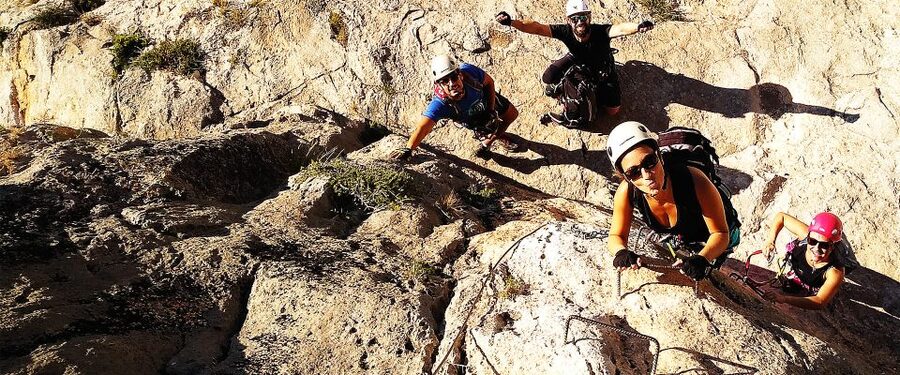
A cable bridge over a canyon is a great equalizer. This half-day via ferrata in the Alicante mountains mixes real movement, big views, and a safety-first guide team so you can focus on the climb, not the stress. You’ll get morning mountain air, plus routes that include Tibetan-style bridges and cabled sections.
I especially love the payoff: you earn your look back over Villena from around 756 to 765 meters above sea level. I also like the small-group vibe, limited to 10 people, with guides keeping an eye on everyone during the technical parts. The main drawback to plan around is that it’s a moderate physical activity, and it’s not a fit if you have vertigo, are pregnant, or are traveling with kids under 12.
Key Highlights I’d Prioritize
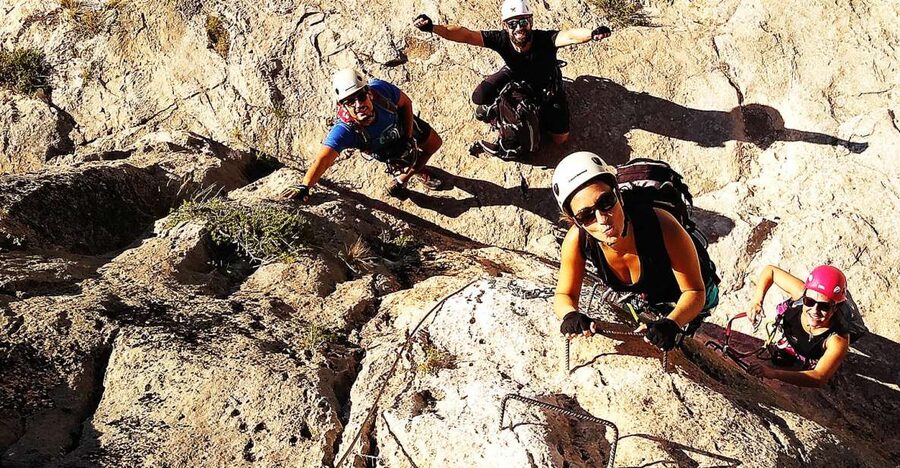
- Tibetan-style cable bridges over the canyon, plus classic cabled via ferrata sections
- Villena views from the climb, around 756 to 765 meters above sea level
- Small group size (max 10), which helps you move with confidence
- Safety gear included (helmet, harness, and heat sink) plus expert safety guides
- Guide-led photos and a guide who actually takes time to capture the moments
Villena’s Sierra de la Villa Via Ferrata: What Makes It Special
This isn’t a walk with a view. It’s a guided climb system that uses fixed cables and metal rungs so you can tackle steep sections with help from the equipment. In the Alicante region, the Sierra de la Villa area has a dry, dramatic feel that makes the canyon crossings feel extra real.
You start close to the village area, then gain altitude step-by-step to reach lookout points and the technical via ferrata portions. The route is described as staggered, which usually means you’ll switch between climbing segments and short transitions, so you’re not fighting fatigue the whole time.
The best part is that the experience is built for participation, not just sightseeing. If you’re comfortable climbing short vertical moves and trusting your harness and cables, you’ll feel the route as an adventure rather than a test.
Paraje Las Cruces: Meet Your Guide and Get Safety Ready
Everything begins at Paraje Las Cruces. Your guide waits there holding a visible sign, which is handy because you are showing up to a trail network, not a big branded storefront.
The first block is your safety briefing, then the gear handoff. Your group stays small, and that matters because via ferrata success is mostly about correct setup and calm execution. The included equipment is specific: helmet, harness, and a heat sink.
That heat sink detail is practical. Fixed metal and cable can get uncomfortable, and having the right protective setup helps you keep your hands and focus on the route. Your guide also explains what to do and what not to do, which is the difference between a fun climb and a fearful one.
From the start, the vibe is controlled and friendly. In the feedback I’m using to shape this review, people singled out how Jose looked after everyone during the adventure and even took nice pictures along the way. That kind of attention makes it easier to relax once you’re clipped in and moving.
Mirador de la Sierra (564 m): The Start of the Ascent
After you meet and get briefed, you head to the trailhead area known as the Mirador de la Sierra, at an altitude of 564 meters. This initial stretch is your transition from easy hiking to via ferrata mode.
I like this structure because it gives you time to get your bearings before the technical sections. You’re not thrown immediately into the most exposed crossing. Instead, you build rhythm, feel the grade, and confirm that your shoes are doing their job on uneven mountain terrain.
The route connects with the via ferrata of Castillo de Salvatierra, so you’re essentially joining an established climbing system rather than wandering into something informal. That’s good news for you because the fixed points and cabled sections are there for a reason, and your guide will help you use them correctly.
Staggered Trail Connections and Lookouts You Actually Feel
As you continue, you’ll move through diverse terrain that includes vertical routes, overhangs, and canyon sections. “Staggered route” is one of those phrases that can sound vague until you’re on it. Practically, it usually means you alternate between climbing efforts and short stretches that let you adjust, breathe, and check your footing.
Along the way, you’ll hit lookout points. These are not just dramatic at the very top. They give you little “reset” moments where you can look out, see where you are in the mountain terrain, and then continue.
Altitude also does its part. The description notes fresh mountain air around 756 meters, and that’s a real reason to take it easy early. Even if you’re fit, working your way up steep sections on a cable route can tire you fast, so a steady pace is your friend.
Tibeten-Style Bridges and Cabled Sections Over the Canyon
Here’s where the adventure flavor really kicks in. You’ll walk along cabled bridges and tackle the kinds of sections that make via ferrata feel like active sport instead of a guided nature stroll.
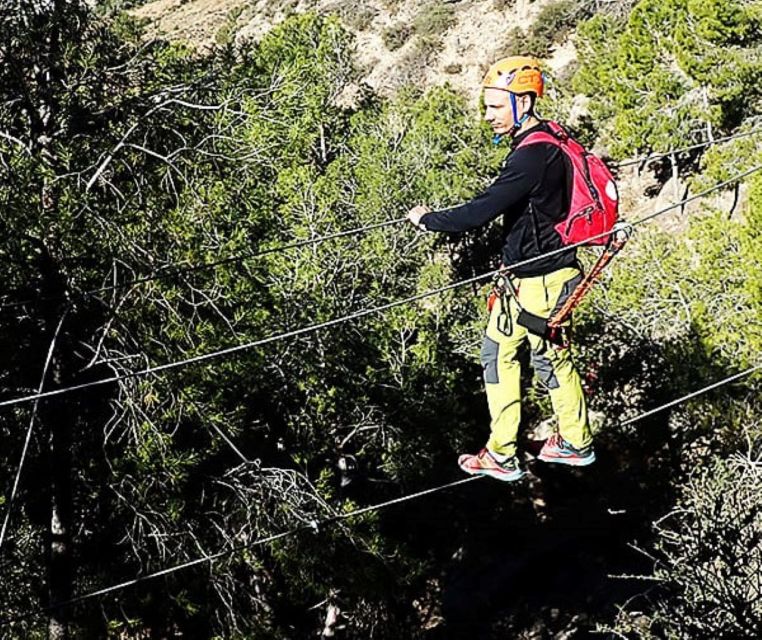
The highlight is the Tibetan-style bridge, built from cable over the canyon below. It’s the kind of moment that gives you a full-body awareness of balance, because you’re not just stepping on stable ground. You’re moving along something that has some give and height.
Your safety setup matters here. When you’re connected properly to the fixed cable, you can shift your focus to careful foot placement and controlled movement. Your guide’s job is to keep that calm, and the group dynamic helps too since everyone is going through the same steps.
You’ll also scale vertical paths and negotiate overhangs. Overhangs are where you need to rely on the system, not strength. The goal is to stay coordinated: clip, move, re-balance, and keep breathing. If you go into this expecting to “power up,” you’ll tense your body more than you need to.
Reaching the Top: Views Over Villena and a Well-Earned Pause
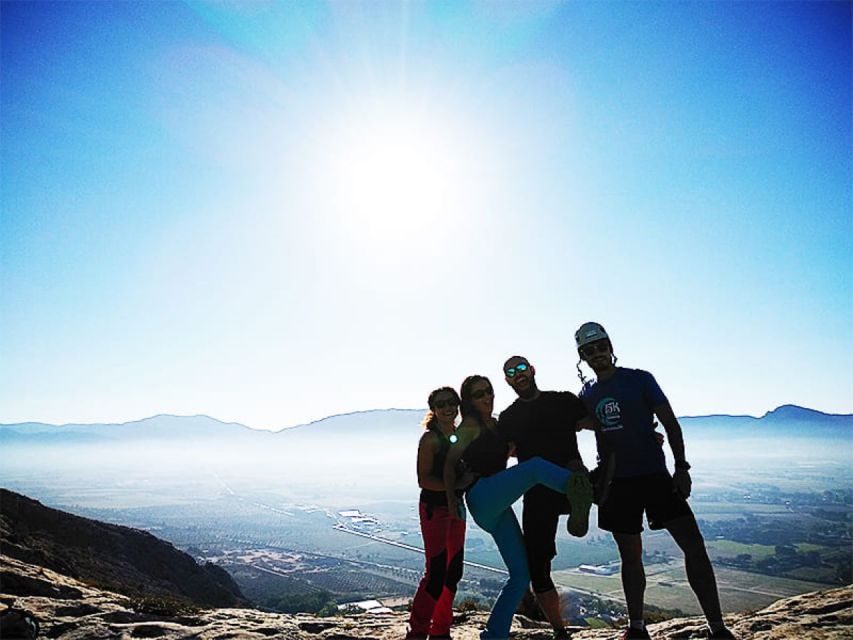
Once you reach the top of the climb, you get time to relax and enjoy the views of the city of Villena below. This is the payoff moment, and it makes the earlier effort feel worth it.
The altitudes mentioned are in the mid to high 700s meters. That range is perfect for a via ferrata day because you get the airy, scenic feeling without it turning into a full-day grind. You’re also not spending hours just walking. You’re earning your scenery through technical work.
If you like photos, you’ll be in good shape here because guide-led pictures are included. Based on the feedback, Jose also took nice photos, which usually means he’s not just handing you a camera, he’s positioned you so you’re visible and the route makes sense behind you.
How Hard Is It, Really? Fitness and Safety Reality Check
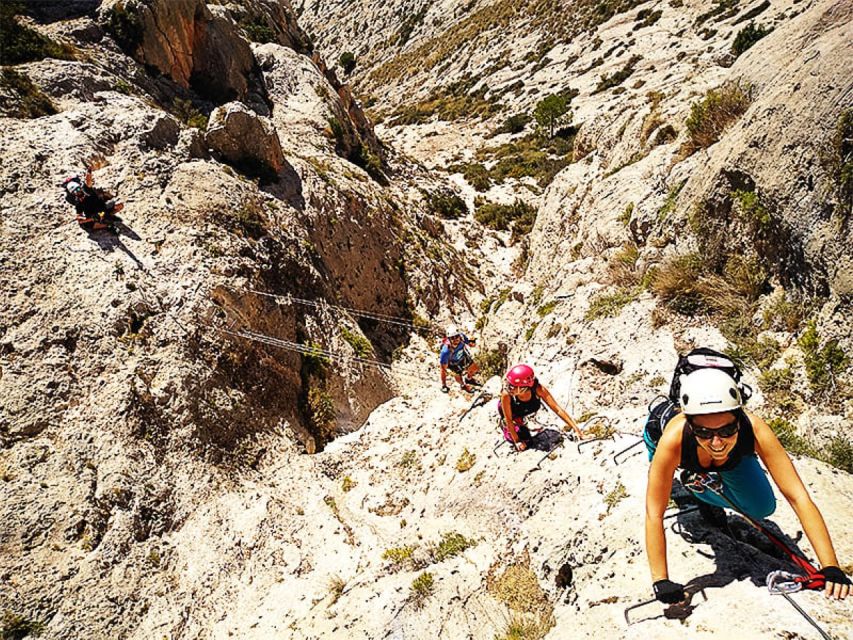
This activity requires a moderate level of physical fitness. That can mean different things to different people, so here’s what it translates to in your day.
You should be comfortable with:
- Sustained hiking on uneven ground
- Short climbs using fixed points
- Being connected to gear and following instructions closely
- Moving carefully on exposed sections
It is not suitable for people with vertigo. That one is important. A via ferrata canyon crossing is exactly the sort of scenario that can trigger a vertigo response, even if you consider yourself “usually fine.”
It’s also not suitable for children under 12, and it’s not listed as appropriate for pregnant women. If you fall into any of those groups, it’s best to skip this and look for a less exposed hiking option in the area.
Price and Value: Is $59 Worth It for a 4-Hour Via Ferrata?
At $59 per person for about four hours, the value depends on what you compare it to. You’re not just paying for a viewpoint. You’re paying for guided risk management, plus a full set of climbing gear.
Included are guides, climbing equipment (helmet, harness, heat sink), and photos. That matters because renting or sourcing gear and paying for instruction can add up fast elsewhere. Here, you show up with the right shoes and water, and the core climbing pieces are handled for you.
The flip side is that food and drinks are not included. So you’ll want to plan your timing and bring what you need for energy and hydration. The instructions explicitly say to bring water, and that’s a smart call for any cable route where you might work harder than expected.
With a small group capped at 10 people, you also tend to get better attention. For a technical activity, that’s not a luxury. It’s part of the safety equation.
What to Bring (So You Don’t Waste Time Worrying)
You get a guided route and the equipment, but your personal prep still matters. Here’s the checklist that the tour info calls out:
- Hiking shoes
- Water
- Weather-appropriate clothing
I’d treat hiking shoes as non-negotiable. The terrain includes vertical sections, cabled segments, and uneven ground, and your feet need traction and comfort so you can focus on the climb.
Wear clothing that fits the weather but doesn’t restrict movement. The activity is in the Alicante mountains, so plan for changing conditions. If you run cold easily, bring a layer you can adjust.
Also, since photos are included, you don’t need to bring a camera to get memories. But having your own phone ready for a few extra shots is still worth it, especially for showing friends the canyon bridge moment.
Languages, Group Size, and Why That Changes the Experience
The tour runs with a live guide in English and Spanish. That’s a big deal on a via ferrata because the safety briefing relies on clear communication. When you understand what the guide expects from you, you move faster and calmer.
The group stays small, limited to 10 participants. That helps in two ways. First, you get enough space for your clips and moves without feeling rushed. Second, the guide can watch everyone’s posture and gear setup, which is where many small problems get caught early.
This kind of group size also makes the vibe easier. You’re likely to see how other people handle the bridge steps, and that can reduce nerves if you’re a first-timer.
Morning Timing and Practical Photo Tips
The experience is built around a morning in the mountains, and that timing often means cooler air and better light for views. You’ll start from the meeting point and work your way toward the trailhead, then up into the via ferrata sections before you end at the top for a view break.
Since guide-led photos are included, you can relax about documenting the day. In the feedback, Jose was specifically praised for taking nice pictures. That suggests the photos are meant to show both you and the route, which is exactly what you want for a via ferrata memory.
If you want a couple extras, aim for quick captures during transitions, not while you’re still moving on exposed sections. The goal is fun and safe movement, not speed-running the camera.
Who This Via Ferrata Is Perfect For
This is ideal if you want a guided adventure that feels physical but not all-day exhausting. You get a real sense of achievement from climbing cabled sections, plus you still end with a classic “look down at the city” view moment.
You’ll likely enjoy it if you:
- Like active experiences over pure sightseeing
- Are comfortable following safety instructions
- Want a small-group day with a guide who supports you
- Enjoy heights but not to the point of triggering vertigo
If you’re more into gentle walks, or if exposure makes you uneasy, you might prefer a different trail with fewer cabled elements.
Should You Book the Villena Half-Day Via Ferrata?
I’d book it if you want a short, high-impact mountain adventure where the logistics are handled and safety is built into the experience. At $59 with gear, guides, and photos included, it’s good value for anyone who wants to do via ferrata without worrying about equipment or technique.
Don’t book it if vertigo is an issue for you, if you’re under 12, or if you’re pregnant, because the activity is clearly flagged as unsuitable for those situations. Also be honest about your fitness. Moderate means you’ll work, and you’ll need steady, careful movement.
If you’re ready for cabled bridges, vertical sections, and a guided day that ends with serious views of Villena, this is the kind of half-day you’ll still talk about later.
FAQ
How long is the Villena half-day guided via ferrata?
It lasts about 4 hours.
Where do I meet the guide?
You meet at Paraje Las Cruces. The guide will be holding a visible sign.
Is the tour group small?
Yes, it’s limited to 10 participants.
What’s included in the price?
Guides, climbing gear (helmet, harness, and heat sink), and photos are included.
Do I need to bring food or drinks?
Food and drinks are not included, so plan accordingly.
What language will the guide speak?
The live guide is available in English and Spanish.
What do I need to bring?
Bring hiking shoes, water, and weather-appropriate clothing.
What fitness level is required?
The activity requires a moderate level of physical fitness.
Who should not book this activity?
It’s not suitable for children under 12, pregnant women, or people with vertigo.
Is it easy to change my plans?
You can cancel up to 24 hours in advance for a full refund, and you can reserve now and pay later.
Half-Day, side by side.
 ★ 4.5Highlights of Valencia Half-Day Private Tour with Local TastingFrom $10537 reviews
 ★ 4.6Benidorm: Mountains Guided Half-Day Jeep Trip to GuadalestFrom $5818 reviews
 ★ 5.0Shore Excursion: Valencia Half-Day Private TourFrom $6338 reviews
 ★ 5.0Valencia Highlights Half-Day Private Tour with Local TastingFrom $1046 reviews
 ★ 5.0Highlights of Valencia: Private Half-Day TourFrom $4716 reviews
 ★ 4.8Canyoning Half-Day Adventure TourFrom $1424 reviews