
REVIEW · CYCLING TOURS
Valencia: the best 25 spots in the city by bike!
Bike speed makes Valencia click. I love the way this route links Ruzafa to the City of Arts and Sciences without feeling rushed, and I also like the mix of grand squares, Gothic buildings, and modern architecture in one outing. The main drawback is simple: it is not for you if you cannot ride a bike or have mobility issues.
You get a guided tour in English or German, plus a comfortable bike and a bottle of water. For $33 and about 2.5 hours, it’s a practical way to see a lot, especially if it’s your first time in Valencia. If rain shows up, plan for rescheduling or cancellation for safety.
Key reasons this Valencia bike tour works
- Old Town focus fast, with photo time at Plaza del Ayuntamiento and guided stops at major landmarks
- UNESCO pair in one ride, including the Silk Exchange, Lonja de la Seda
- Mercado Central stop with local-food energy, centered on Valencia’s market culture
- Turia Park as your reset, on the long former riverbed where the city breathes again
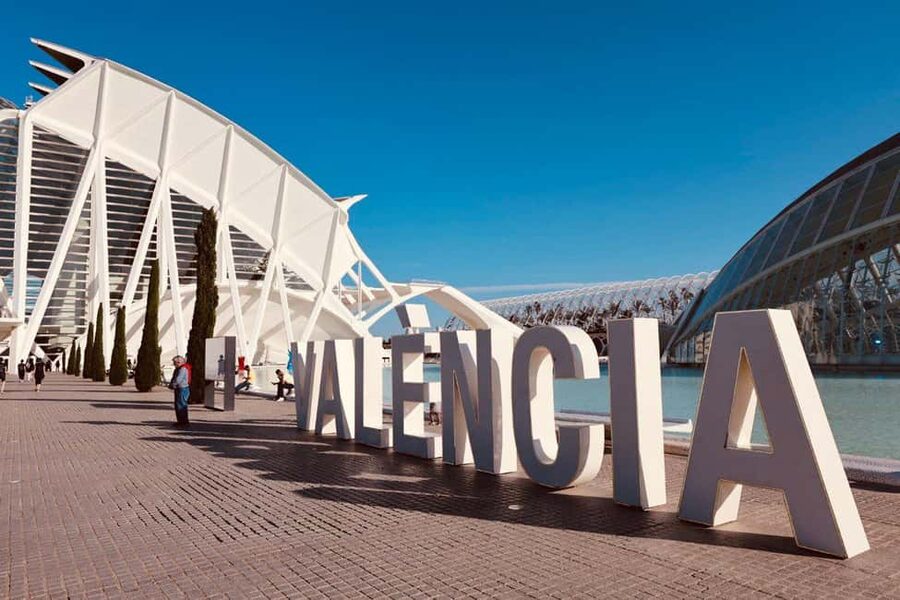
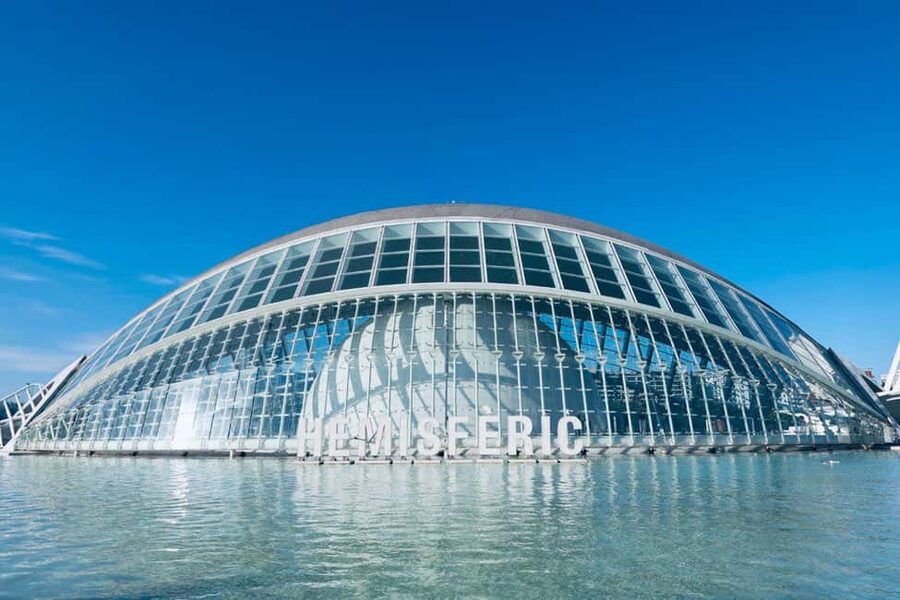
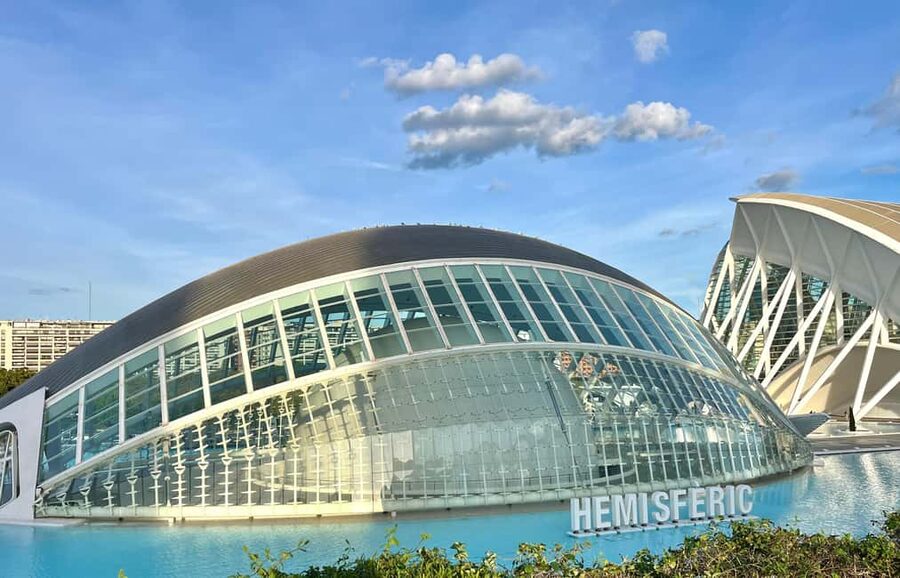
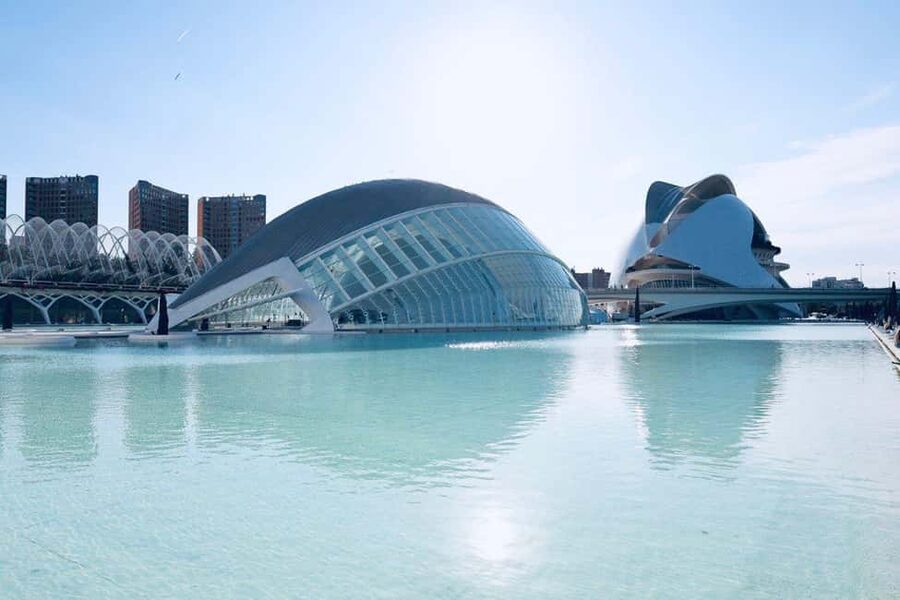
- City of Arts and Sciences visuals, from Hemisferic to the science museum experience
Why 2.5 hours on two wheels beats long days on foot
Valencia is one of those cities where the best plan is often short, purposeful, and powered by movement. This tour is built around a 2.5-hour window, which means you get big sights and key districts without spending your whole day in transit.
The payoff is the pacing. You’ll have guided time at the signature spots, plus structured chances to pause for photos and look around at your own speed. That matters in Valencia, where streets can feel busy and lighting changes fast. By bike, you can keep the momentum going and still stop when something catches your eye.
It also helps that you’re provided with a comfortable bike and a bottle of water. Even if you upgrade to an electric bike, you still get the same route logic and stop sequence. For a first visit, the combination of Old Town and the modern City of Arts and Sciences is exactly what you want. If you only do one half, you miss the contrast that makes Valencia feel like two cities sharing the same coastline.
Starting in Ruzafa, then rolling to Plaza del Ayuntamiento
Your ride starts at C. de Puerto Rico, 23, and the beginning is a good choice because it puts you in the mood right away. Ruzafa has that lively, local feel, and you’re not stuck right away in the most tourist-heavy corners.
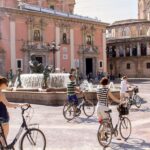
From there you head toward Plaza del Ayuntamiento, the city’s central square. You get photo time and sightseeing along the way, and once you arrive you’ll have the chance to take in the Neo-Classical styled buildings that frame the plaza. This is the kind of stop that helps you orient yourself fast. When you understand where the civic heart is, everything else becomes easier to place on the map.
A practical tip: spend your first photo breaks here. Plaza views are usually clean and wide open, so you’ll get better shots before the route starts mixing narrow streets and architecture close-up.
The other thing I like about this early push is how it sets expectations. This tour is not just about seeing buildings in passing. It’s about learning what they were for and why they matter, then getting you to the next layer while your energy is still high.
The rest of Valencia, one booking at a time
- Valencia: Oceanogràfic Entry Ticket
★ 4.7 · 9,893 reviews - Valencia: 24 or 48-Hour Hop-on Hop-off Bus Ticket
★ 3.9 · 5,611 reviews - Valencia: Palosanto Flamenco Show Ticket
★ 4.8 · 3,876 reviews - Valencia: Catamaran Cruise with Sunset Option
★ 4.0 · 3,566 reviews
Marques de Dos Aguas and the Valencia you can see with your eyes
Next up is Palacio del Marques de Dos Aguas. The name alone is a clue that you’re in for something different. This palace is described as the most eclectic building in Valencia, and that fits the feeling you get when you see it in person, with details that don’t seem to belong to just one style.
Even when you only have a short guided stop, palaces like this are worth it because they teach you how wealth and taste expressed themselves in the city. You’re not studying a single facade, you’re getting a snapshot of the design mood of Valencia at the time.
What makes this part of the ride valuable for you is that you’ll be linking the palace to what comes next. The route keeps stepping through eras and influences, so the architecture isn’t random. It’s building toward the UNESCO storytelling that comes later.
If you’re the type who likes to take notes or sketch, this is a good moment to do it. A short guided explanation plus close viewing time is a strong combo, especially on a bike tour where you’re already moving.
Mercado Central and the mojama moment
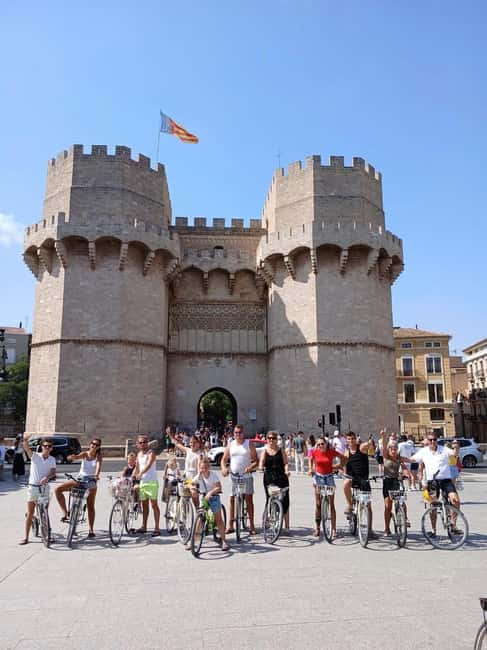
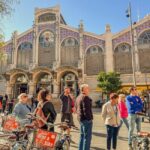
Then you reach Mercado Central de Valencia, known as the oldest market in Spain. This is one of those stops where the “what” is more interesting than the “where.” The market is where locals shop, chat, and snack, and it carries the everyday soul of the city.
In this stop, you’re guided through the space and the focus is on what’s good there. The tour info specifically calls out trying mojama, a cured fish delicacy tied to Valencia’s food culture. If you’ve never had it, this is a solid first taste because the flavor tells you something about the region right away.
One consideration: markets can be crowded. You’ll move through with your group and you might have a limited window depending on the flow inside. If you want a longer food break, bring patience and plan to keep your tasting light so you’re ready for the next ride segment.
This stop is also where you get a break from “pure monuments mode.” After palaces and Gothic buildings, shifting to market life refreshes your brain.
Lonja de la Seda: UNESCO silk exchange power
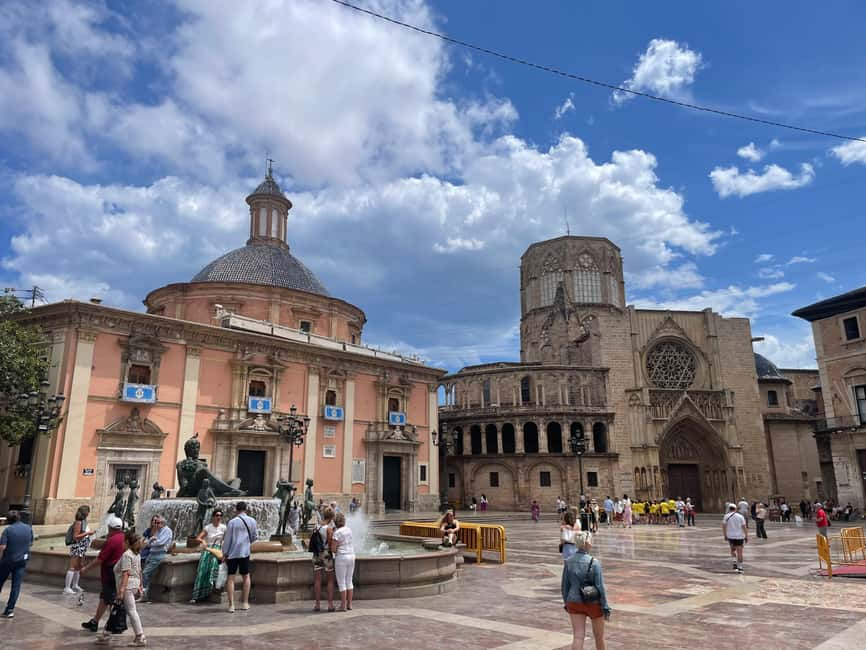
After the market, the tour zeroes in on Lonja de la Seda (Silk Exchange), a UNESCO World Heritage Site. It’s not just a pretty building. It was designed by the Master of the Valencian Gothic Architecture, and that piece of context helps you look at it differently.
When someone explains the structure and purpose, you start noticing the details you might otherwise miss. Lonja buildings are about trade and prestige, so the design language tends to feel confident and purposeful. On a bike tour, you get just enough time to absorb that, then move along while the mental picture is still fresh.
Why this stop is a highlight for your money: it’s one of those major sights that can eat up half a day if you do it alone, especially with ticket lines and wandering. Here, you get guided context and efficient movement as part of the package.
If you care about architecture, keep your camera ready. You’re not just capturing a postcard, you’re recording the shapes and lines that tell the story of a trading empire.
Plaza de la Virgen, the Basilica, and the Cathedral angle
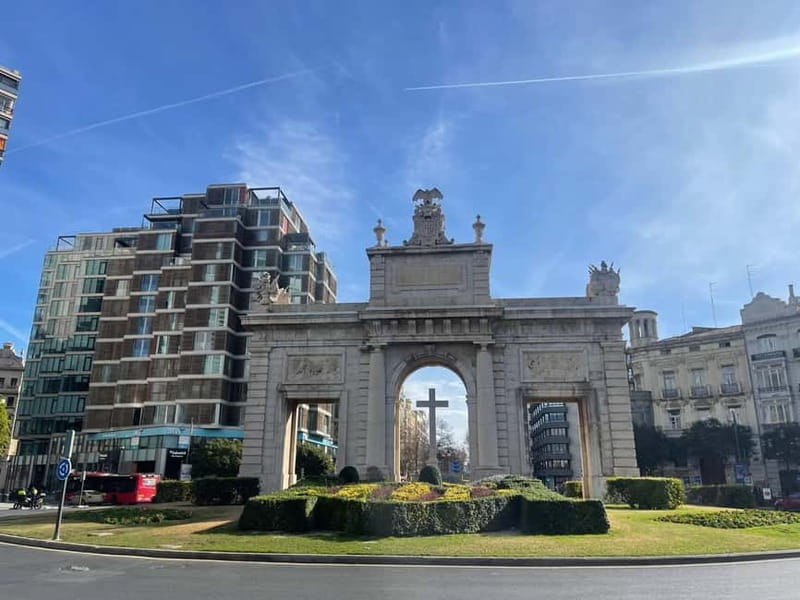
From the Silk Exchange area, you roll toward Plaza de la Virgen and the Basilica, which the tour frames as Valencia’s most iconic historic plaza. This is where the Old Town starts to feel like the Old Town. Stone, churches, and people gathering around a shared center.
You then reach the Cathedral, described as having a Latin cross plan, and you’ll hear about the Holy Grail connected to the Cathedral. Even if you’ve heard the story before, this is a chance to connect location with meaning. Religious sites in Europe can feel abstract when you only read headlines. Seeing the setting, with guided explanation, makes the narrative feel grounded.
A practical note for this kind of stop: plan for slower moments. Plaza space and church areas can get busy, and you may find it harder to move exactly how you want. That is normal. The ride is structured around the time you’ll need to observe and listen.
If you want the best experience, bring a respectful mindset and give yourself a little time to look up. Cathedral stories are often told through proportions, not just text.
Deeper into the riverbed on two wheels
Torres de Serranos to Turia Park: the city’s old entrance and its green reset
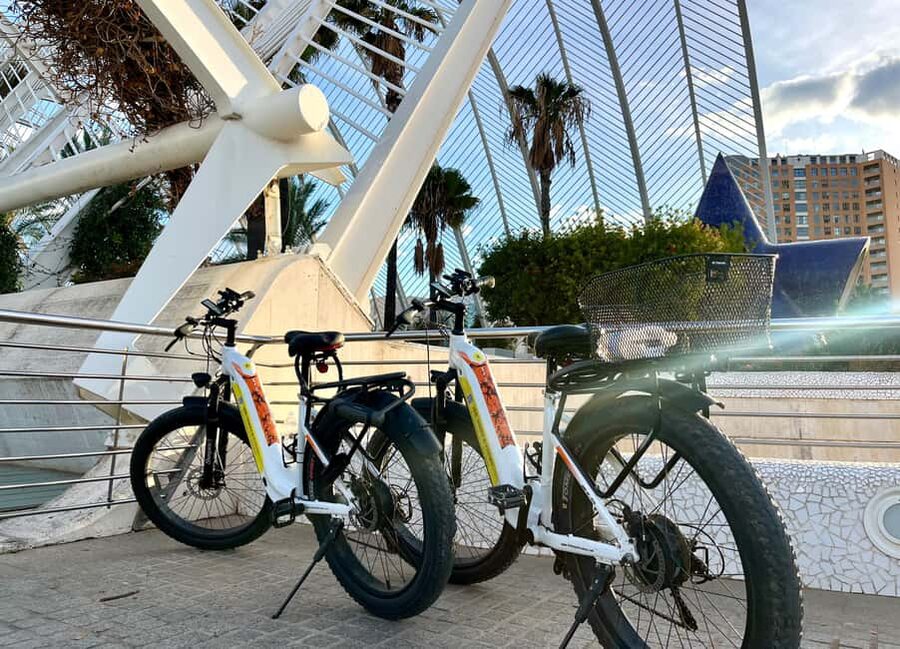
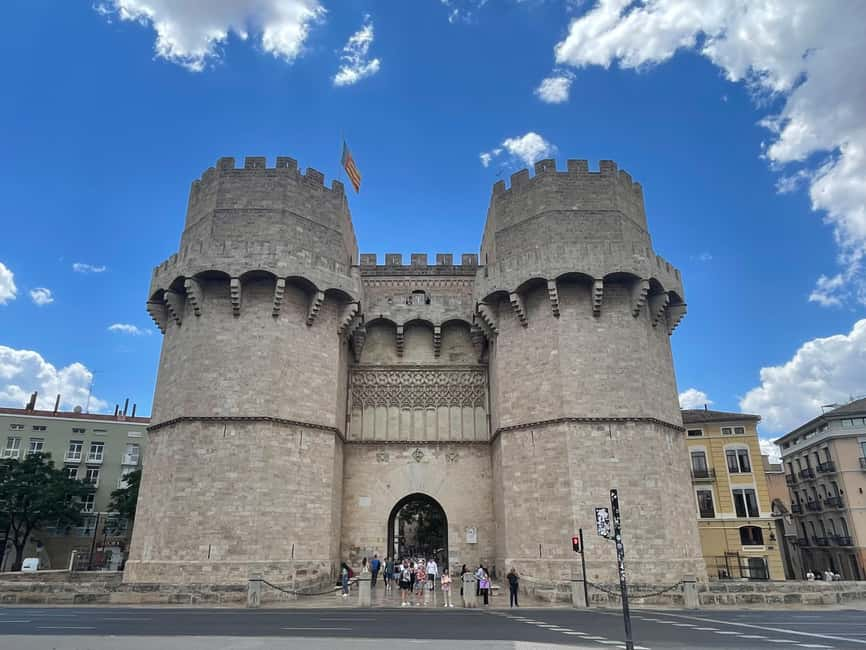
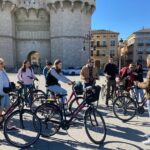
Now you shift into a more atmospheric stretch. Torres de Serranos is the old main entrance to Ciutat Vella, Valencia’s old city. This isn’t only a viewpoint stop. It’s a reminder that the city used to have boundaries, and gates like this were functional defense structures as much as symbols of power.
From there you head to Jardins del Real / Vivers, which includes a magnificent botanic garden and the former site of the Royal Palace. This is a good “cool down” zone for your senses. Even on a warm day, gardens help you slow down without stopping the whole tour.
Then you land in Turia Park, a 9 km long urban park built on the former route of the Turia river. This part is a big reason you should book a bike tour in Valencia instead of just doing monuments. The park gives you breathing room between major sights, plus a satisfying ride segment where you can feel the city unfold.
On a practical level, Turia Park makes the tour more comfortable. It helps you avoid too much backtracking and keeps you away from the most stressful traffic zones. On an energetic note, it’s also where you get some of the most pleasant “travel pause” moments, since the setting is calmer and more open.
City of Arts and Sciences: Palau de la Música to the Hemisferic eye
The modern section is where this tour becomes fun in a big way. You go to the City of Arts and Sciences, and it’s clearly a place meant to be seen from a moving perspective.
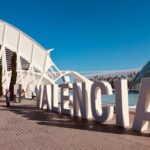
First, you’ll visit the Palau de la Música, the Valencian Concert Hall with a waterfall-shaped glass dome. Even if you don’t attend a performance, the building itself is the show. Look for how the structure plays with light, because that’s part of the design appeal.
You’ll then reach Palau de les Arts, the futuristic Opera House shaped like a Roman helmet. That description is spot-on. It feels theatrical even when nothing is happening inside.
Next comes L’ Hemisféric, described as the eye of knowledge. It’s the kind of architecture you can’t fully appreciate from a distance. Up close, the curves and silhouette start making more sense, and the name becomes more literal.
If you’re thinking about “do I want to spend money or time on museums,” this tour handles the decision for you in a simple way. You also get the Science Museum, described as interactive, with the slogan Not touching is prohibited! That line is funny for a reason: it tells you the museum is meant to be hands-on.
This is the best stop for families and for adults who still get excited by learning that doesn’t feel like homework.
L’Àgora, Pont de l’Assut de l’Or, and the Calatrava touch
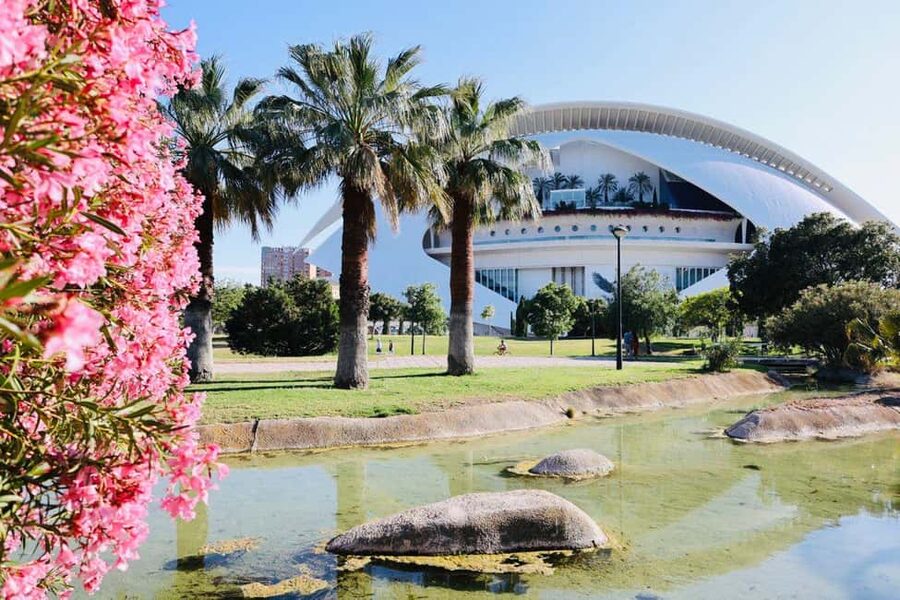
The route continues to L’Ágora, a multifunctional space designed by Santiago Calatrava. Even if you don’t know his name, you’ll notice the design language: sweeping curves, a sense of motion, and a futuristic feel that matches the whole area.
Then there’s Pont de l’Assut de l’Or, described as the highest point in Valencia. This is a great “wrap your brain around the scale” moment. High viewpoints help you understand how the City of Arts and Sciences sits relative to the city. From up top, the ride stops feel connected rather than random.
If you’re someone who worries that modern architecture tours can feel like looking at buildings and nothing else, this section is built to prevent that. The stops are spaced so you can connect one structure to the next, and the guided time helps you understand what you’re seeing beyond appearance.
Bikes, comfort, and who should book
This tour is designed for bike riders, plain and simple. It’s not suitable for people with mobility impairments and it’s not suitable for people who can’t ride a bike. There’s also a weight limit listed at 264 lbs (120 kg).
If you’re comfortable on a bike, you’re set. You’ll get a comfortable bike and a bottle of water, and there’s even a children’s helmet included. For families, note that a baby seat costs 3€, so plan for that if it matters to you.
If you’re worried about hills or just want an easier ride, you can upgrade to an electric bike when booking. I like electric bikes for this kind of route because they protect your energy for the long sightseeing parts, especially if you’re traveling with family or if the weather is warm.
What to bring is straightforward: sun hat and sunscreen. And if rain hits, the tour may be rescheduled or canceled for safety. That’s rare in the sense that you still have to plan for it, but it’s honest. With modern architecture and long park segments, a wet day can mean less comfortable riding.
Price and value at $33 for 2.5 hours
At $33 per person for about 2.5 hours, you’re paying for more than “a bike.” You’re buying guided interpretation plus the practical benefit of transportation across multiple districts.
Here’s how I think about the value. If you tried to do this route solo, you’d still need bike rental or frequent taxis, and you’d still be figuring out what to prioritize. This tour bundles those decisions into one plan, and it also includes a bottle of water and a helmet for children, which quietly offsets everyday costs.
The language options are also a plus. You can choose English or German, which makes the guided explanations more useful instead of just sightseeing in silence.
Should you book this Valencia bike tour?
Book it if you want a fast, well-structured introduction to Valencia that covers both the Old Town and the City of Arts and Sciences in one outing. It’s especially good if you like architecture, food culture, and having a guide explain what you’re seeing while you still get enough pause time for your own photos.
Skip it if you cannot ride a bike, if you need mobility support the tour can’t provide, or if you’re looking for a slow, purely museum-based day. Also consider the weather. Rain can change plans, and you’ll want flexibility.
If you’re a first-timer, this tour is one of the smartest ways to get oriented. You’ll leave with a clear mental map of where Valencia’s old power lived, where its civic heart beats, and why its modern side feels just as intentional.
FAQ
Where does the bike tour start and end?
The tour starts and ends at C. de Puerto Rico, 23.
How long is the Valencia bike tour?
The duration is about 2.5 hours.
What is included with the tour price?
The tour includes a guided tour, a comfortable bike, a bottle of water, and children’s helmets.
Is there an electric bike option?
Yes. You can upgrade to an electric bike by choosing the electric bike add-on during booking.
What languages are the guides?
The tour has live guides in German and English.
What should I bring?
Bring a sun hat and sunscreen.
More of the Riverbed on Two Wheels
More Tour Reviews in Valencia





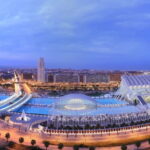
More Valencia, Booked and Rated
Newest Valencia write-ups


Cycling Tours, side by side.
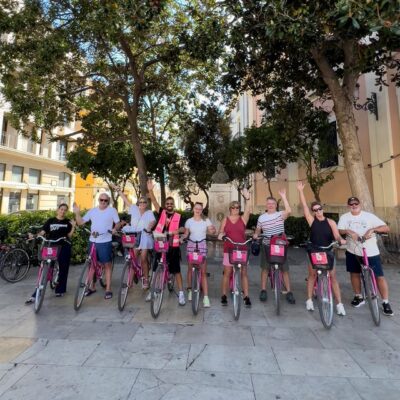 ★ 4.7City Highlights Guided Bike TourFrom $262,373 reviews
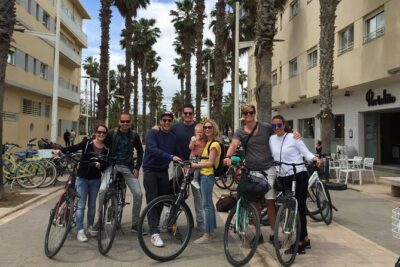 ★ 5.0Valencia Bike Tour from the City to the Beach, plus Bike Guy App!From $481,187 reviews
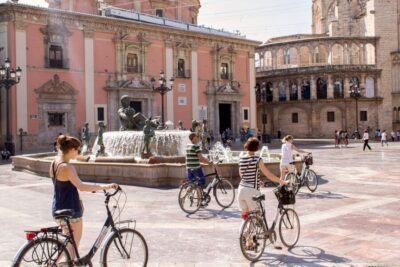 ★ 4.6Valencia Bike TourFrom $44826 reviews
 ★ 4.8Top 25 Highlights Guided Bike TourFrom $34644 reviews
 ★ 4.8Alicante: City and Beach Bike TourFrom $35587 reviews
 ★ 4.9Valencia Bike Tours: City HighlightsFrom $27450 reviews
 ★ 4.5Valencia Highlights Bike TourFrom $28285 reviews
 ★ 4.8Alicante : E-Bike Coast Tour, Roman Fish Farm and SnorkelingFrom $38250 reviews
Filed in