
REVIEW · VALENCIA OLD TOWN TOURS
Valencia Old Town Guided Tour
Valencia feels layered, like every street has a second story. This Old Town guided walk uses old pictures and videos to explain how the city changed, so the buildings make sense fast. I especially liked how the guide points out details you would normally miss, and how the route strings together history, architecture, and everyday local life.
Two big wins for me: first, you get both the landmark hits and the smaller squares that help you understand how Valencia was laid out. Second, the finish in the Colón and Don Juan de Austria shopping area is smart, because you can pause for coffee or horchata right after seeing the big sights. One thing to consider, though, is that key stops like the Silk Stock Market and the l’Almoina archaeological area are not included with entry tickets.
Key things I’d circle on your map
- Old photos and videos for context: you’ll see how Valencia evolved, not just what to look at now
- Small group, real guiding: limited to 10 participants, so questions do not vanish into the crowd
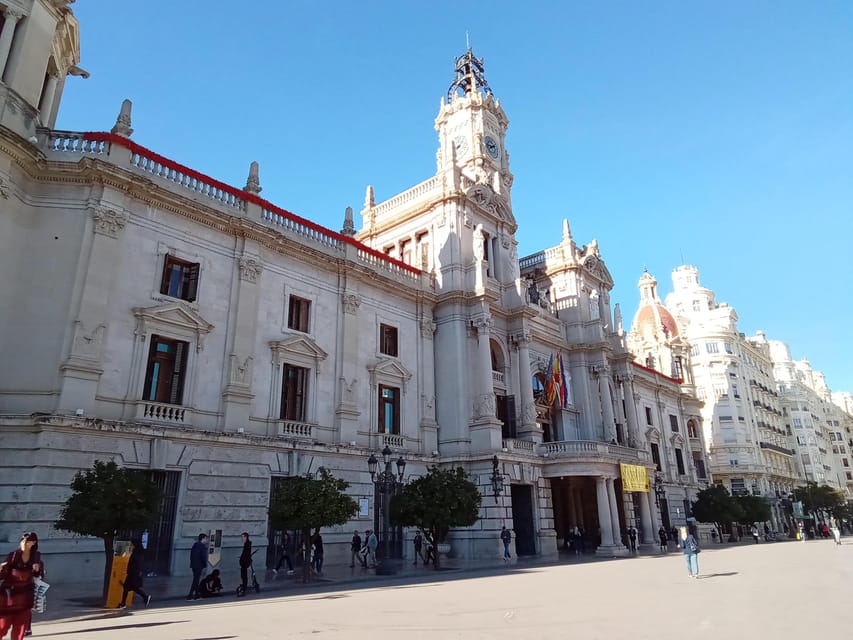
- Fallas-season hotspots: Town Hall Square, Post Office façade, and Serranos Towers fit perfectly with March city energy
- Trade and power in one route: Central Market, Silk Stock Market, and Dos Aguas show different kinds of wealth
- A satisfying shopping-area finish: Colón Market and the nearby streets make it easy to keep exploring after the tour ends
From Estación del Norte’s flags into the Old Town
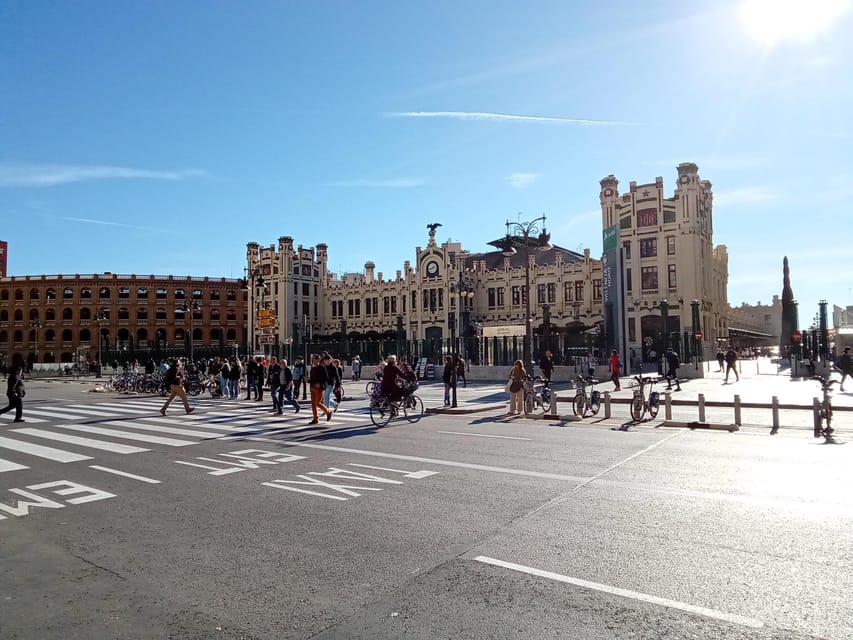
The tour starts at the central tower of Estación del Norte, right under the Valencian, Spanish, and European flags. If you’re using public transport, it is close to the Xativa-Renfe stops, which makes the start low-stress. Also, the station sits near the bullfighting arena, so you’ll have an easy visual landmark to orient yourself.
Right away, you’re walking with a plan. Your guide (in English, Spanish, German, or Italian) sets the tone by showing old photos and videos that explain the city’s evolution. That matters because Valencia’s Old Town can feel like a collage at first. With that background, the route becomes readable, like someone handed you the captions.
This is a small-group format, limited to 10 people. That number is a big deal on a walking tour, because it keeps the guide from speaking to a megaphone crowd. You can ask for clarifications, and you can stop briefly without slowing everyone to a crawl. The tour is wheelchair accessible too, which is a practical plus if you need it.
The walk is about 2.33 hours, so think of it as a focused afternoon or morning activity. You’re not trying to do the whole city in one go, and that’s exactly why it works. You’ll cover the most important areas of the Old Town while still having time to absorb what you’re seeing instead of speed-running it.
And yes, it’s a walking tour, so comfortable shoes help. Valencia’s streets can be uneven in places, and you will spend real time on foot between stops.
Town Hall Square, the Post Office façade, and Fallas timing
One of the most memorable parts of this walk is how it connects major Old Town architecture to the calendar. You’ll stand at Town Hall Square and also see the façade of the Post Office. During March, this is one of the monthly hot points for Fallas festivities, which run from 15th to 19th March.
If you visit outside that window, it still works because you’re learning what the space is known for. But if your dates line up with March, you’re effectively seeing the city in its preparation mode, when the streets feel tuned for celebration. Even then, you do not have to rely on special event timing to enjoy it, because the tour also explains the deeper role these places play in Valencia’s identity.
Your guide also brings in the idea of Valencia as a city with entrances and thresholds. That theme shows up later with the Serranos area, but it starts here. Squares like Town Hall Square are civic center stage. The Post Office façade is another kind of statement, a reminder that cities grow by building communication routes alongside culture.
This is where you start to get the vibe: Valencia is not only about one monument. It’s about how public spaces, architecture, and tradition share the same stage.
The rest of Valencia, one booking at a time
- Valencia: Oceanogràfic Entry Ticket
★ 4.7 · 9,893 reviews - Valencia: 24 or 48-Hour Hop-on Hop-off Bus Ticket
★ 3.9 · 5,611 reviews - Valencia: Palosanto Flamenco Show Ticket
★ 4.8 · 3,876 reviews - Valencia: Catamaran Cruise with Sunset Option
★ 4.0 · 3,566 reviews
Serranos Towers and the old entrance feeling
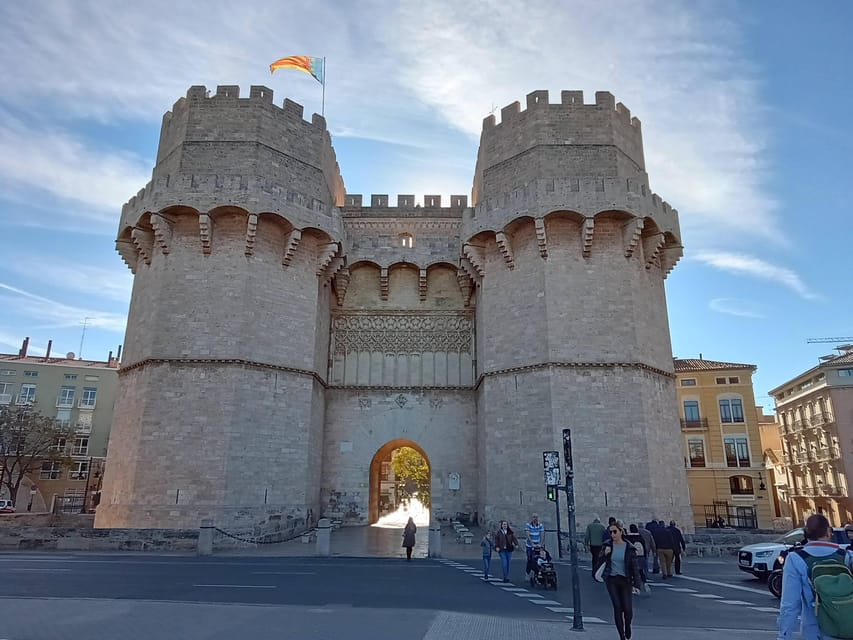
Next up, you’ll head toward Serranos Street and the Serranos Towers. These are described as the old entrance gate to the city, and they also serve as the welcome point of the Fallas festivities.
That combination makes the stop more than just a photo moment. An entrance gate tells you how a city thought about boundaries, protection, and movement. And if you’re visiting around March, a welcome point tells you something about ceremony and public energy. You get both meanings in the same location.
This is also a great area for orientation. When you know where the old gate sits, the Old Town route starts to click into place. It helps you understand why certain streets line up the way they do, and why some neighborhoods feel like they’re built to feed the main pathways.
The guide’s storytelling style is part of the value here. In the reviews, the guide is often praised for making the tour feel informative and friendly, and you’ll feel that from the start. It’s not dry lecturing. It’s explanation that helps you look better.
If you’re the type who likes architecture, you’ll appreciate how the tour uses street geography as a teaching tool. Even if you only take a few photos, you’ll leave with a mental map that lasts.
Central Market and the Silk Stock Market, trade in two eras
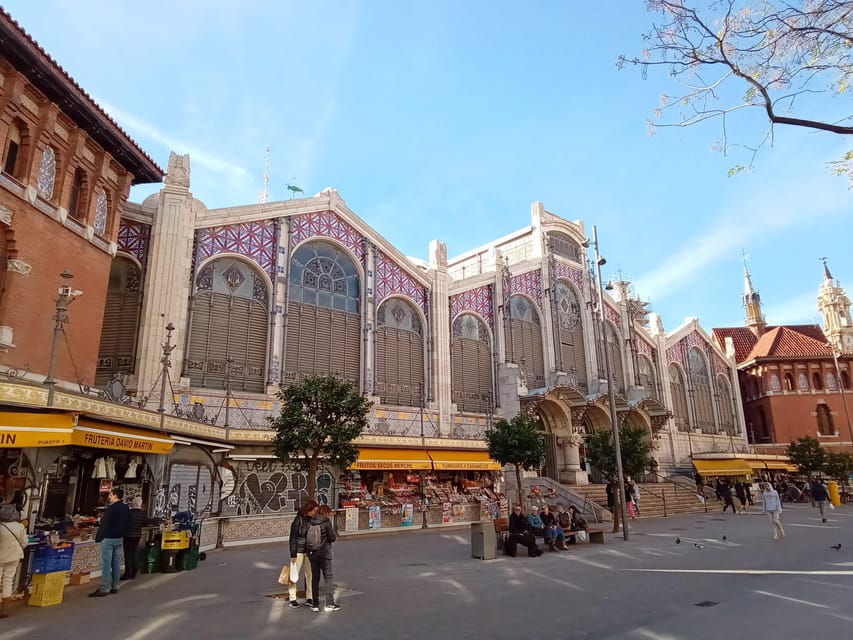
At the heart of the route are the Central Market and the Silk Stock Market. These are two of Valencia’s most important buildings, with the Central Market tied to the 15th century and the Silk Stock Market tied to the 20th century.
I like this pairing because it shows two types of prosperity. Markets and trading hubs are practical power. They shape daily life, not just royal taste. You’re not just seeing pretty facades, you’re learning how commerce shaped the city’s layout and its sense of status.
Important practical note: entry tickets are not included for the Silk Stock Market or the Central Market. The tour still guides you to the places and explains what you should notice outside and around them, but if you want to go inside those specific sites, you’ll need to plan for that separately.
So here’s the best approach: if you want maximum depth, treat this walk as your on-the-ground orientation and history briefing. Then decide whether you want to add paid entries on top. If you prefer a lighter schedule, you can focus on what you see on the street and still get full value from the story and context the guide provides.
This is also one of the best parts for shopping-style street energy. You’ll pass through pedestrian streets where you can shop in traditional Valencian clothing stores. The tour doesn’t just point to shops. It frames them as part of heritage and identity, so you understand why that clothing style still matters.
The Old Town diamonds, then Queen and Virgin Square origins
After the market area, the tour shifts into a set of classic Old Town squares often grouped as the 3 diamonds: Doctor Collado Square, Lope de Vega Square, and Round Square. I like this segment because these places are compact, scenic, and perfect for slowing down.
A “diamond” area is easy to picture, like Valencia’s planning left little shaped hubs for gathering. And when you pair those hubs with the next stops, the city’s origin story makes more sense.
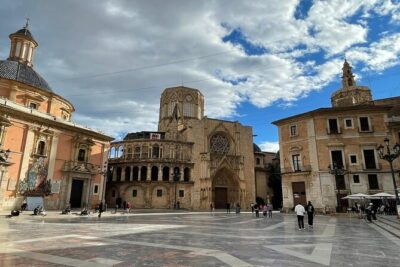
Then you’ll reach Queen Square and Virgin Square. These squares are described as serving as the origins of the city, along with Roman Valentia and the Water Tribunal. That’s a big cultural clue. Valencia’s identity is not only medieval. It’s layered with Roman roots and continuing traditions tied to water.
One thing you should do during these stops is look for how the buildings frame the squares. Even without going inside every site, you can tell how public life was meant to happen. You also get that sense of continuity, where a long-running tradition leaves marks on the city plan.
If you like history but you hate feeling lost in it, this section is a good fit. The guide helps connect names and places into a single story instead of a list.
L’Almoina birthplace area and Paz Street’s ceramic power
A stop at the Archeological Center l’Almoina adds a grounded anchor to the origin theme. It’s described as the birthplace of the city, and the tour includes a visit to the area. Entry tickets are not included here, so you can view it with the guide and still choose whether to buy a ticket to go in.
This is a key moment for anyone who likes seeing how the past sits under the present. Even if you do not enter the center, the explanation helps you understand why this location matters so much.
From there, you move toward Paz Street and the baroque Palace Marquis of Dos Aguas. This is one of the architectural showpieces on the walk, and it’s described as showcasing power, art, and ceramic heritage in a building. I really like that description because it tells you what to look for. You can focus your attention on how the palace communicates status, and how ceramics fit into the design language.
And again, entry tickets to the Palace Marquis of Dos Aguas are not included. That does not make the stop less worthwhile. You still get the context and the exterior view, and it gives you a choice about whether to spend extra time inside based on your interests.
Still in Ciutat Vella? Keep walking
Don Juan de Austria and Colón Market, the smart finish for coffee and horchata
The last stretch is designed for an easy exit into real life. You’ll walk along Don Juan de Austria street and then into Colón street and the Colón Market area. This is described as the shopping district and a perfect place to finish your walking tour.
I like finishes like this because they don’t force you into a hard timetable. You can sit down, relax, grab a coffee, and have traditional Valencian horchata right after you’ve worked through the heavy history and big architecture. It’s also a practical moment to upload your pictures while you’re still in the area that feels like the city’s modern shopping flow.
If you’ve got energy left, this is where you can extend the day without needing to plan a new transport route. The route sets you up in the kind of neighborhood where you can keep going at your own pace.
Price and time: is $28 a good deal?
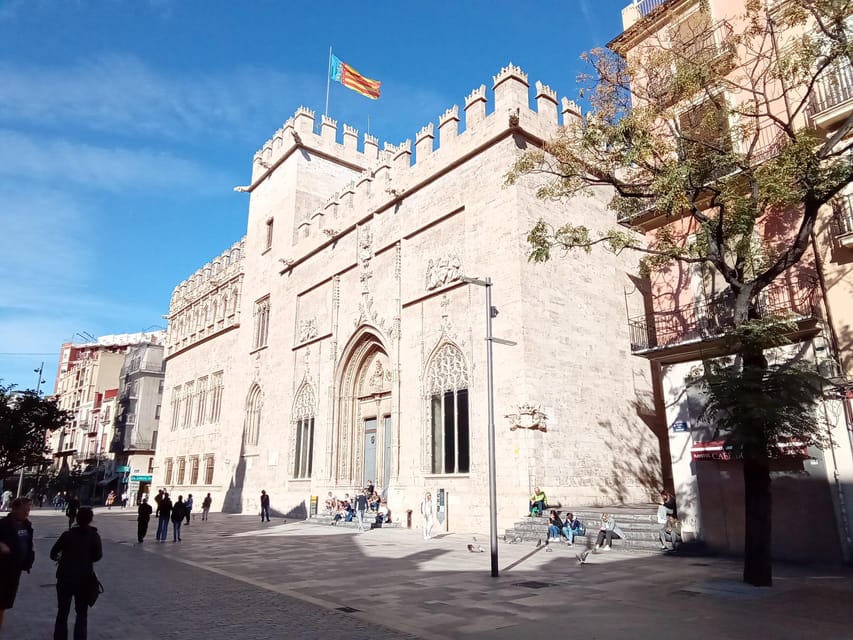
At about $28 per person, this tour sits in a reasonable range for a guided, small-group Old Town walk. The value is not just the number of landmarks. The value is the way the guide builds connections between them using old photos and videos, then uses the walk to reinforce that story street by street.
You’re also getting real structure for the time you spend. With a duration of about 2.33 hours, you cover the key Old Town sites without feeling like you’re racing daylight. The small group size of up to 10 participants is another value driver, because it keeps the experience from turning into a herding situation.
A couple things can affect your total cost though. Entry tickets are not included for the Silk Stock Market, l’Almoina, and the Palace Marquis of Dos Aguas. If you decide to go inside those, you may add ticket fees on top of the $28 tour price. Still, that can be a good trade, because you can decide based on your interests instead of paying upfront for entries you may skip.
This tour is available with a live guide in four languages: English, Spanish, German, and Italian. It is wheelchair accessible, and it is not allowed to include alcohol or drugs, which keeps the vibe respectful and focused. One important limit: it is not suitable for people over 95 years.
Also, it is not available on 17th and 18th March. If your trip lands in that exact window, you’ll need to choose another day.
Should you book this Valencia Old Town guided walk?
I recommend booking it if you want a clear, guided way to understand Valencia’s center in a couple hours. The mix of architecture, squares, and shopping streets makes it more than a checklist, and the use of old pictures and videos helps you connect the dots between time periods.
I would skip or at least adjust expectations if you know you only want indoor visits. Since entries to the Silk Stock Market, l’Almoina, and Dos Aguas are not included, you’ll either pay extra separately or keep your experience focused on the exterior sights and context.
If you like walking but want your time to feel organized, this is a strong choice. You’ll end in the Colón area with time to enjoy the city right away, and that is a good kind of travel efficiency.
FAQ
Where do I meet for the Valencia Old Town guided tour?
You meet at the central tower of Estación del Norte (Norte train station), under the Valencian, Spanish, and European flags.
How long is the guided tour?
The walking tour is about 2 hours, and the guided portion is listed as about 2.33 hours.
What are the main sights this tour includes?
You’ll visit places such as Town Hall Square and the Post Office façade, the pedestrian streets and traditional clothing stores, Central Market, Silk Stock Market area, Queen Square, Virgin Square, Serranos Street and Serranos Towers, the Archeological Center l’Almoina area, Paz Street, the Palace Marquis of Dos Aguas area, and the Colón and Don Juan de Austria shopping area ending near Colón Market.
Are entry tickets included for places like the Silk Stock or Dos Aguas?
Entry tickets are not included for the Silk Stock, the Archeological Center l’Almoina, or the Palace Marquis of Dos Aguas.
Which languages is the live guide available in?
The guide is available in English, Spanish, German, and Italian.
Is the tour wheelchair accessible?
Yes, it is wheelchair accessible.
Is the tour available on 17th and 18th March?
No, the activity is not available on the 17th and 18th of March.
How much does it cost?
The price is $28 per person.
More Tour Reviews in Valencia






Ciutat Vella, Three More Ways




More Valencia, Booked and Rated
Newest Valencia write-ups


Valencia Old Town Tours, side by side.
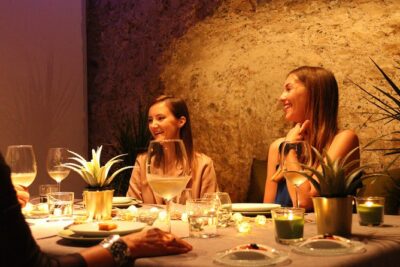 ★ 5.0Valencia Old Town Tour with Wine & Tapas in 11th Century Historic MonumentFrom $963,234 reviews
 ★ 4.9Old Town Tour, Wine & Tapas in an 11th c. MonumentFrom $941,797 reviews
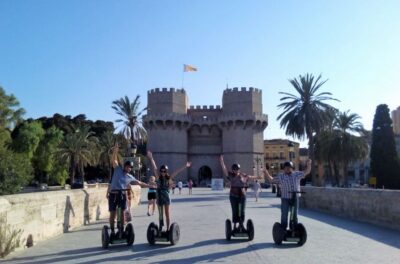 ★ 4.8Medieval Old Town Segway TourFrom $41251 reviews
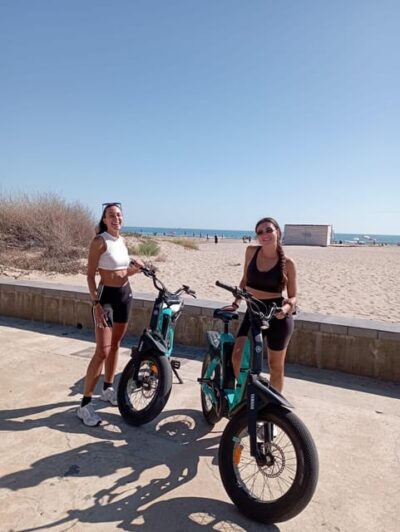 ★ 4.7Valencia all in one: beaches, old town & city arts by E-bikeFrom $4778 reviews
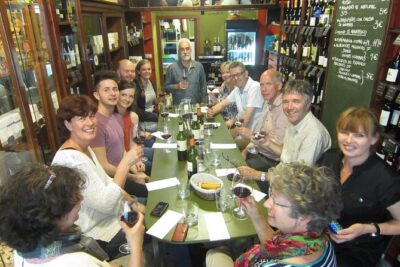 ★ 5.0Private premium wine tasting with snacks in Valencia’s old townFrom $7157 reviews
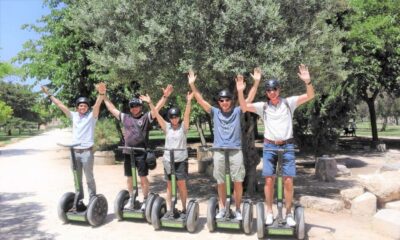 ★ 4.8Old Town and Gardens Segway TourFrom $4754 reviews
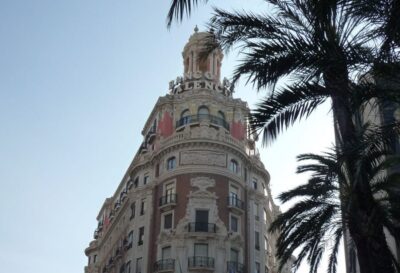 ★ 4.9Private 4-Hour Walking Tour of the Old TownFrom $39454 reviews
 ★ 5.0Private Segway Tour of Valencia’s Old TownFrom $5335 reviews
Filed in