
REVIEW · TOURS
Essential Valencia Tour
Valencia hits you fast, if you’re willing to walk. This 2-hour guided essentials loop is built for first-time visitors, with major landmarks, market life, and quick context for what you’re seeing. I liked the way it strings together power, faith, and trade in one tight route, and I especially enjoyed the human guide energy that makes the architecture make sense instead of just looking pretty. One watch-out: the pace is efficient, and a couple of past experiences mentioned the tour can feel slightly unstructured at times, so keep your expectations flexible at crowded photo spots.
I also like that the ticket model is clear. Some stops are free to enter, while a couple of the big-name sights may require separate admission, so you can plan ahead without surprises. Plus, the group is capped at 20 people, which keeps it manageable and helps you actually hear the explanations while you’re moving.
Last thing to know: this tour needs good weather. If it’s rainy or miserable, you may be offered another date or a full refund, which is fair for a walking-focused visit through Ciutat Vella.
Key highlights that make this tour worth your time
- Torres de Serranos to the Cathedral area: you get a logical, old-town route instead of random wandering
- La Lonja de la Seda: you’ll understand why this European Civil Gothic trading hall became UNESCO-worthy
- Mercat Central de Valencia: a real working market moment, not a museum stop
- The Cathedral neighborhood, plus Santa Catalina: you’ll see the three doors area and the iconic Caterineta bell tower
- Religious landmarks tied to local identity: the Virgen de los Desamparados is central to Valencia’s story
- Small group size: max 20 travelers helps the walk feel personal
Meeting at Torres de Serranos, then starting where Valencia makes sense
Your walk begins at Torres de Serranos, right in Ciutat Vella. This is one of the best ways to start because it immediately places you in medieval Valencia. Standing at the old city gate, it’s easier to imagine what this place looked like before the streets spread outward.
The tour ends near Plaça de la Mare de Déu, which is a smart finish for sightseeing. You’ll land close to the Cathedral area and the surrounding squares, so you’re well positioned to keep exploring on your own right after the guide hands you off.
This is a two-hour experience, so think of it as a “get your bearings fast” format. You’re not trying to do a full-day museum marathon. You’re collecting the key visual anchors, then letting your later walks feel more intentional.
Ajuntament de Valencia: Neoclassical elegance and civic pride
One of the first major sights on the route is Ajuntament de Valencia, the city hall. It’s Neoclassical, and that matters because it shows a Valencia that’s not stuck in medieval time. The building has that clean, official look that tells you the city’s civic identity has long been a big deal here.
Even if you’re not an architecture nerd, you can still use this stop well. I like using city hall moments to get a feel for the city’s current rhythm: where locals gather, how the city portrays itself, and why certain neighborhoods keep drawing attention.
Admission isn’t included for this stop, so plan for a possible paid entry depending on what you want to do when you arrive. If you’d rather just look from outside and move on, you can still benefit from the explanation and the structure of the walk.
The rest of Valencia, one booking at a time
- Valencia: Oceanogràfic Entry Ticket
★ 4.7 · 9,893 reviews - Valencia: 24 or 48-Hour Hop-on Hop-off Bus Ticket
★ 3.9 · 5,611 reviews - Valencia: Palosanto Flamenco Show Ticket
★ 4.8 · 3,876 reviews - Valencia: Catamaran Cruise with Sunset Option
★ 4.0 · 3,566 reviews
Mercat Central de Valencia: where local food culture feels real
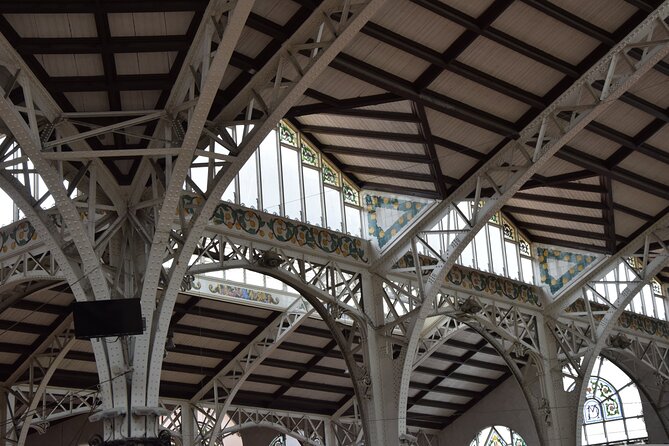
Next comes Mercat Central de Valencia. This is not a “look but don’t touch” market stop. It’s described as a traditional market that continues to supply fresh products to the people of the capital, and that is exactly the vibe you want from a first Valencia visit.
Why I like this kind of stop on a guided essentials walk: markets tell you how people actually live. You can learn history, sure, but Mercat Central gives you something more immediate, smells, sounds, bustle, and the everyday rhythm that never shows up in a photo.
The good news is that the market entry is free in this tour’s structure, so you can spend time inside without worrying about admission. Even if you don’t buy anything, you can still observe stalls and the way the building holds the space.
Practical tip for this segment: keep your camera ready but don’t let it steal your attention. The real fun is watching how locals navigate the market.
A major Baroque church stop: faith made visible in dramatic form
At one point you’ll see one of Valencia’s most important churches with a very prominent Baroque style. Baroque architecture is all about drama, movement, and emotion. If you’ve ever looked at a church ceiling and wondered why it feels like it’s trying to grab you, Baroque is the answer.
This is a short stop, so you’ll want to scan quickly and then listen. Look for how light hits surfaces and how ornamentation is used to guide your eye. Then let the guide connect what you’re seeing to how Valencia expresses devotion through art.
Because the tour is timed for essentials, don’t expect a long sit-down. Treat this as a “see it, understand it, move on” moment.
La Lonja de la Seda: the trading hall that tells a big story
La Lonja de la Seda is one of the most impressive stops on the walk. You’ll be seeing a European Civil Gothic jewel, and it’s also a UNESCO World Heritage Site. That combo is powerful because it ties beauty to function. This wasn’t built for show alone. It was built for trade, contracts, and the economic confidence of Valencia.
This is where you’ll get the most out of a guide. Without context, it’s easy to admire it and forget it. With context, you start noticing details that make sense: the way the space supports formal business, how the architecture communicates authority, and why it earned a spot on the UNESCO list.
Admission for La Lonja isn’t included, so consider whether you want to pay for the interior. If you’re trying to keep costs down, you can still get value from the outside orientation and the guide’s explanations. If you want the full effect, you’ll likely want to step in.
The first commercial square: a quick lesson in how cities grew
You’ll also pass by the first commercial square in the city, known for its distinct shape. This kind of stop is easy to underestimate. But squares are where urban life clusters, and commercial squares show you how a city organized itself around business.
I like that this tour includes at least one “city planning” moment. It helps you connect the market stop with the trade hall stop and the government or civic stops. Suddenly, Valencia isn’t a pile of monuments. It’s a system.
Because the stop is brief, focus on the big idea: where do people meet, where does business happen, and how do those spaces shape street life?

Santa Catalina Church and the Caterineta bell tower
Santa Catalina Church is next, and it has a famous bell tower, the Caterineta, which is often treated like a Valencia symbol. This is a classic “oh, I’ve seen that in photos” moment, and it’s useful even if you only get a quick look.
Bell towers are visual anchors. They guide your sense of direction when you later wander the old streets on your own. They also show you how religious architecture doubled as a city landmark.
The entry is free for this stop, so it’s an easy win in the tour’s structure. You can spend a little time looking up and around to get the tower’s position relative to nearby streets, which helps a lot when you start mapping your next walk.
Valencia Cathedral area: three doors and that architecture you can feel
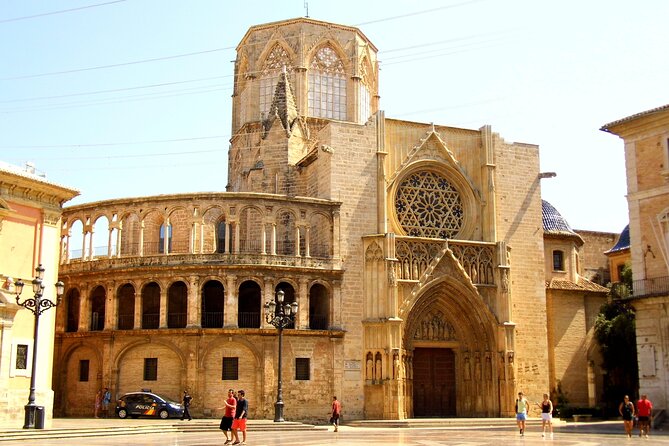
The tour includes a Cathedral observation segment. You’ll see the three doors and the distinctive architecture that Valencia is known for. Cathedral “three doors” details matter because they’re part of how the building tells a story through entrances, symmetry, and design choices that feel intentional rather than random.
Even from an outside perspective, this is one of those places where you can slow down mentally. Listen for what the guide points out, then stand back and re-check your mental image.
You’ll also spend time around the squares that surround the Cathedral, which are part of the historic heart of the city. These open areas are where the Cathedral’s presence feels social, not just sacred. After the tour, you’ll likely want to linger here because it’s the sort of space that invites a second look.
Basilica de la Virgen de los Desamparados: the patron saint moment
Another stop is the Basilica de la Virgen de los Desamparados. This is where the image of Valencia’s patron saint, the Virgen de los Desamparados, is found. Even if you don’t have a deep background in local devotion, this stop is important because it connects religion to identity.
Why this works on a walking essentials tour: it gives you more than style. It tells you why people care. That image and the basilica’s role help explain why Valencia’s cultural calendar and everyday pride can feel tied to faith without being stuffy.
Entry is free in this tour’s schedule, so this is one of the best places for a no-pressure visit. Spend a minute or two looking carefully, then use the guide’s context to make the symbolism click.
The Valencian Government headquarters: Gothic power in plain sight
The route also touches the headquarters of the Valencian Government. It’s described as one of the Gothic jewels of the city, and that’s a great contrast to the earlier Neoclassical city hall. It shows Valencia’s layered civic story: styles change, but the civic center keeps pulling importance back to the same general neighborhood.
If you like architecture, this is a moment where you’ll probably notice the differences right away. Gothic tends to create vertical energy and structural drama. Pair that with a government building and you get an immediate sense of authority.
This part is brief, but it matters because it helps close the loop of the tour’s themes: civic identity, trade, markets, and religion all fold into one walk.
How long it really takes, and when this tour fits best
The tour runs about two hours. That’s a sweet spot for first visits, especially if you’re only here for a short time. You can start early, get the monuments explained, then spend the rest of the day eating, wandering, and doing your own route based on what grabbed you.
The group size is capped at 20 travelers, so it should feel like a guided stroll rather than a herd. You’ll also be near public transportation, which is handy if you’re chaining this with museum time or the beach later.
One more practical note: the tour requires good weather. If the forecast is rough, plan to keep your afternoon flexible or be ready to switch dates. Walking tours can feel very long when the streets are slick or visibility is poor.
Also, most travelers can participate, and service animals are allowed. If you have any mobility needs beyond that, you’ll want to judge it like any walking tour through old streets, cobbles, and short stops.
What you pay for: value at $15.42 and how ticketed stops can affect your plan
The price is $15.42 per person, which is a strong value for a guided route that covers multiple major landmarks in a short window. The guide factor matters here. Instead of reading plaques for an hour, you get a human explanation while you’re moving between places.
Now, the ticket reality: some admissions are included as free stops, and some are not. Mercat Central de Valencia is listed as free, Santa Catalina Church is free, Basilica de la Virgen de los Desamparados is free. Ajuntament de Valencia and La Lonja de la Seda are listed as admission not included.
So your real out-of-pocket cost could be “$15 plus any entrances you choose to take.” That’s not a bad deal, but it changes the math depending on what you prefer. If you want full interior access to the big-ticket monuments, you may spend extra. If you’re happy with outside viewing and the guide narrative, the tour stays a bargain.
The vibe: friendly, passionate, and efficient, with one exception to keep in mind
From the overall experience, the vibe is consistently described as friendly and passionate, with English that works well for most visitors. That matters because a walking tour lives or dies on communication, and this one seems to land that part for most people.
Efficiency is part of the design. You’ll see key monuments in a bit over two hours, which is ideal when you want highlights without committing to a full day. Just remember that the tight timing can make some moments feel quick.
I also took note of a rare failure mode from past experiences: a guide did not show up for at least one departure. That’s not something you can predict, but you can protect yourself by arriving on time and keeping an eye on your confirmation details.
Should you book this Valencia essentials walk?
Book it if you want a smart first contact with Valencia. This is ideal when you want the big monuments explained, you like walking, and you’re happy to trade in-depth time in one museum for a broader sense of the city.
Skip it or choose a different format if you’re hoping for lots of free time at each stop or you strongly prefer fully guided entry into every monument. Because some admissions are not included, you may have to decide on the spot whether you’ll pay to go inside.
If you’re here for a day or two and you want your bearings, this tour is a practical way to start. You’ll leave with a map in your head, not just photos on your phone, and that makes the rest of your Valencia time easier to enjoy.
FAQ
How long is the Essential Valencia Tour in Valencia?
It runs about 2 hours.
How much does the tour cost per person?
The price is $15.42 per person.
Where is the tour starting point?
The start is at Torres de Serranos, C. de la Blanqueria, 1, Ciutat Vella, 46003 València, Valencia, Spain.
Where does the tour end?
The tour ends at Plaça de la Mare de Déu, 4, Ciutat Vella, 46001 València, Spain.
Is the admission price included for all stops?
Not for all stops. Ajuntament de Valencia and La Lonja de la Seda are listed as Admission Ticket Not Included, while several other stops are listed as Admission Ticket Free.
Does the tour use a mobile ticket?
Yes, it uses a mobile ticket.
What is the maximum group size?
The tour has a maximum of 20 travelers.
What is the cancellation policy?
You can cancel for a full refund if you cancel up to 24 hours in advance. If you cancel less than 24 hours before the start time, the amount paid is not refunded.
Is weather a factor for this walking tour?
Yes. It requires good weather, and if canceled due to poor weather, you’ll be offered a different date or a full refund.
More Tours in Valencia




More Tour Reviews in Valencia





More Valencia, Booked and Rated
Newest Valencia write-ups


Tours, side by side.
 ★ 5.0Valencia Old Town Tour with Wine & Tapas in 11th Century Historic MonumentFrom $963,234 reviews
 ★ 4.7City Highlights Guided Bike TourFrom $262,373 reviews
 ★ 4.9Old Town Tour, Wine & Tapas in an 11th c. MonumentFrom $941,797 reviews
 ★ 4.6From Valencia: Caves of San José Guided Excursion and TicketFrom $551,717 reviews
 ★ 4.8Alicante: Secret Flavors Food TourFrom $341,514 reviews
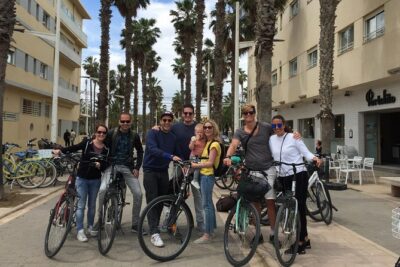 ★ 5.0Valencia Bike Tour from the City to the Beach, plus Bike Guy App!From $481,187 reviews
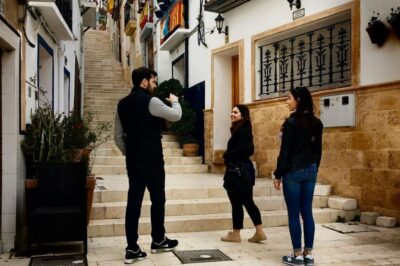 ★ 4.8Alicante: Seven Secrets of Alicante Discovery TourFrom $34956 reviews
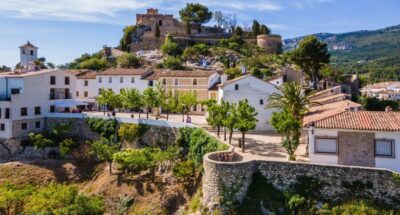 ★ 4.7From Alicante/Benidorm: Guadalest & Algar Waterfalls TourFrom $53912 reviews