
REVIEW · ALICANTE TOURS
Alicante: Private Guided Visit to Alicante Bullring & Museum
Alicante’s bullring has more corners than you expect. Step inside a Historic Monument and you get a structured walk through the museum, the arena, and behind-the-scenes areas most visitors never see. I like that the experience is handled in a didactic, question-friendly way, so you can understand the tradition even if you don’t personally agree with it.
Two things I especially like: the chance to walk to the ring itself, plus the practical tour stops that explain how the bullring works, from entries to ring access points. One drawback to consider is that the subject matter is still bullfighting, so if you find it upsetting, you may prefer a culture-and-architecture style tour that stays farther from the arena floor.
This visit lasts about 1.5 hours, and it’s built for a small private group, which means you can ask follow-ups without feeling rushed. You’ll start at the main door in Plaza de Espanya, then follow your guide through doorways, service spaces, stands, and viewpoints.
Key highlights you will care about
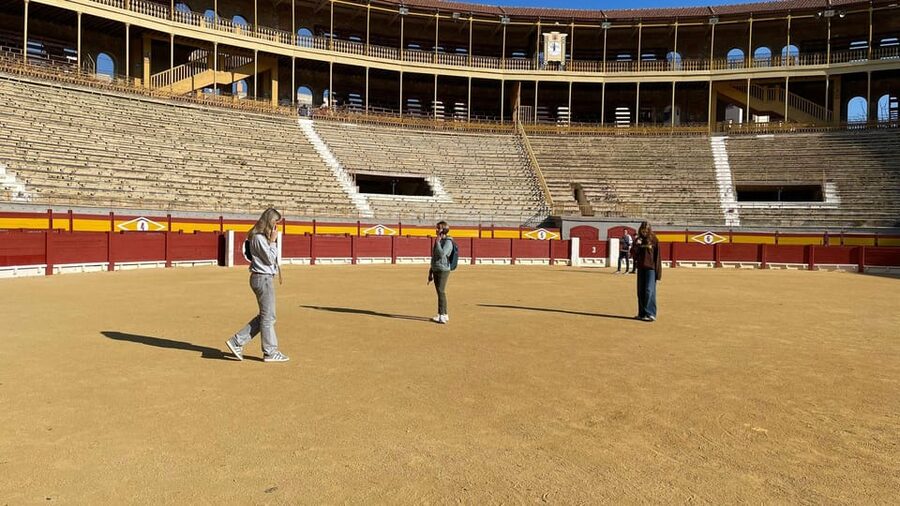
- Step into the ring where bullfights happen, not just look from the seating
- Hidden areas on the route, including bull pens and the infirmery area
- Museum access included, with context on the tradition and the building
- You can handle a bullfighting cape, guided in a safe, instructional way
- A private guide in your language, so questions stay clear and personal
- Wheelchair accessible, so you can focus on the visit, not logistics
Alicante Bullring: more than a photo stop
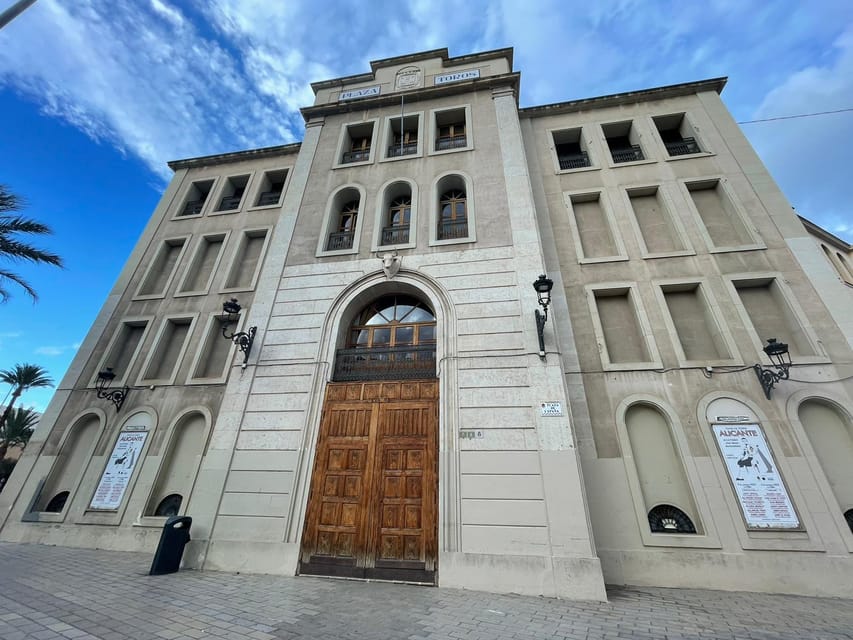
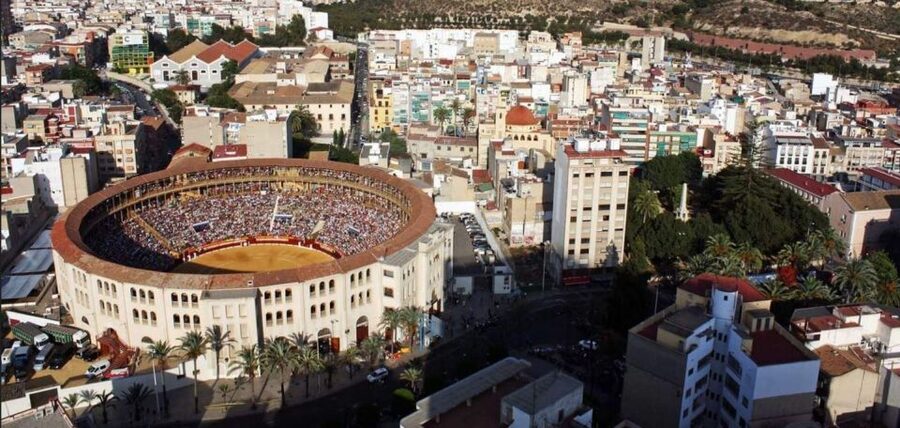
The Alicante bullring is one of the city’s best-known monuments, and a guided visit helps you understand why it feels both ceremonial and functional at the same time. From the outside it reads as classic arena architecture. Inside, you see how the design controls movement, sightlines, and drama.
I like that this tour treats the bullring as a full system. You are not just hearing general facts. You walk past specific areas that explain the flow of the event, which makes the culture easier to grasp in context.
You also get the museum along the way. That matters because the building alone can feel like a set of rooms. The museum adds story, so you can connect architecture to tradition instead of treating them like two separate experiences.
Where to meet and how to time your arrival
You meet at the main door of the Alicante bullring, in Plaza de Espanya, and you should arrive about 10 minutes early. The tour guidance also asks you to come 5 minutes before your booking time to the main door, so I’d treat 10 minutes early as your safest bet.
There’s no hotel pickup included. That’s usually fine, because the meeting point is central and easy to reach on foot or by local transport once you’re in the area.
The good part of arriving early is that you can calm your nerves before the guide starts the route. If you’re visiting during a busy period, it also helps you avoid the last-minute stampede outside the entrance.
The rest of Alicante, compared
- From Alicante: Roundtrip to Tabarca Island
★ 4.3 · 3,992 reviews - Alicante: Secret Flavors Food Tour
★ 4.8 · 1,514 reviews - Alicante: 2-Hour Late Afternoon Catamaran Cruise
★ 4.5 · 1,265 reviews - From Alicante: Guadalest, Altea & ticket in Algar Waterfalls
★ 4.7 · 1,027 reviews
A private guide in your language, with real Q and A time
This is a private group tour, which changes the whole vibe. Instead of fitting your questions into a group schedule, you can ask things as they come up during the walk.
The guide is available in several languages, including English, Spanish, French, Russian, Portuguese, and Italian. That language choice matters here, because bullfighting is full of terms and details, and you’ll understand more when you don’t have to translate in your head.
Guides such as Monica and Joel have been highlighted for thorough explanations and the ability to answer lots of questions. Even if you walk in skeptical, the structure helps you learn what the tradition means to people who practice it and why the arena is built the way it is.
If you’re unsure how you feel about bullfighting, don’t worry. Many people come for the cultural understanding, not to endorse the practice. The tour’s didactic tone is meant to give you the background, so you can form your own opinion with more information.
Door of Triumph, infirmery, and chapel: the arena as a building
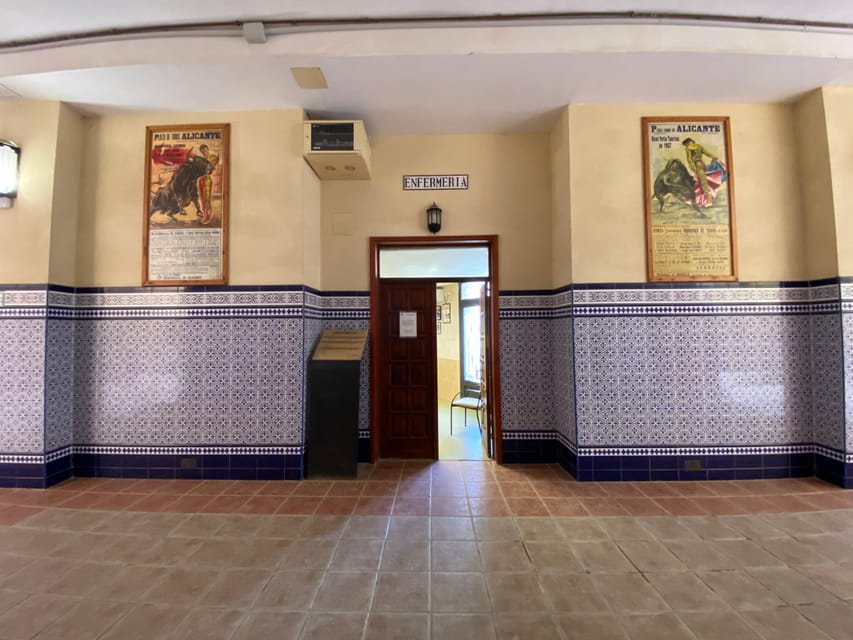
Your route starts with key access points and formal spaces, and that’s a smart way to begin. The Door of Triumph is the kind of name that hints at ceremony, but what you learn in that space is more practical: where the event signals entrance and how the building supports pageantry.
Then you move through areas such as the infirmery and the chapel. Even if you’re not a history expert, these rooms make the bullring feel like a real working environment, not just a stage. You start noticing that this architecture is designed for routine, preparation, and controlled movement, not only spectacle.
This is also where the guide’s comments on history and architecture of the classified historic monument become most useful. You’re seeing features in context, so the explanations land better than if you read them on a sign.
One practical tip: ask about what you’re seeing as you go. The moment someone points out a functional detail, it stops being random decoration and becomes part of the event’s logic.
Bull pens, stands, and the ring floor
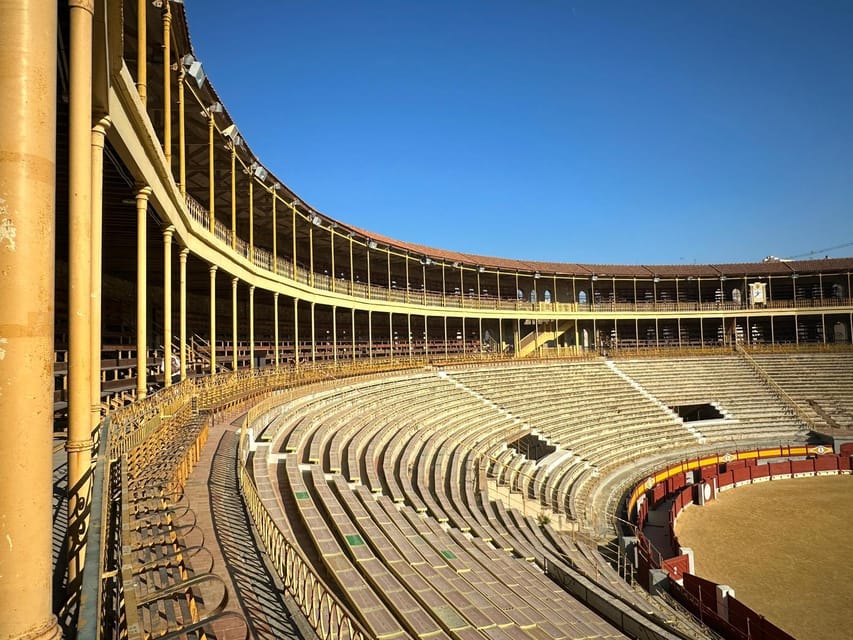
The heart of the visit is getting to the bull pens area and then moving toward the seating and the ring itself. The bull pens portion is especially important because it shows you how controlled the lead-up is. You’ll understand the route from holding areas to the arena, and that makes the ring feel like the final stage of a process rather than an isolated circle.
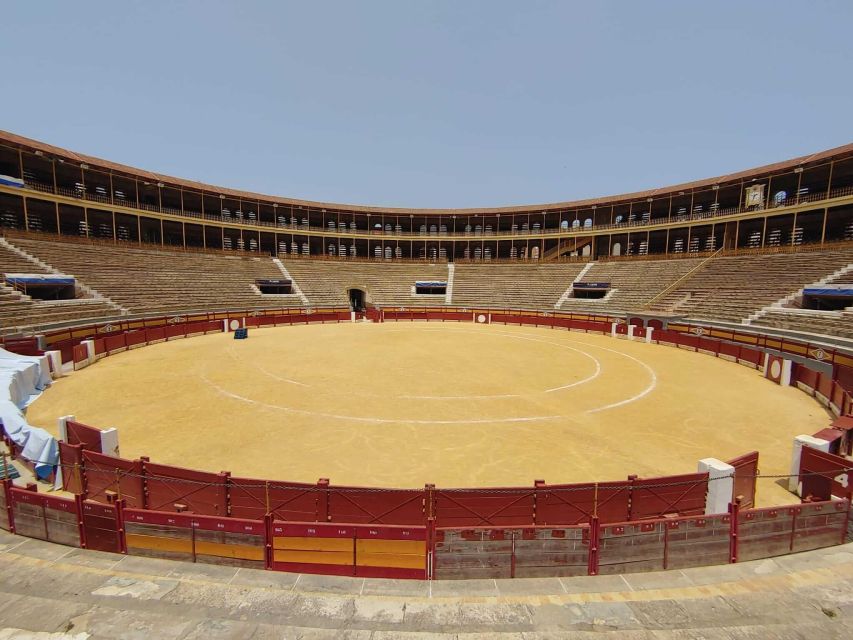
Next comes the stands, where you can get a sense of sightlines and how spectators experience the action. Even if you don’t have tickets for an actual event, standing there helps you understand why certain design choices exist. It explains the atmosphere that supporters talk about and why the arena feels like it has a strong center.
Then you reach the moment many people remember most: stepping into the ring. You’re standing where bullfights happen, so it’s not just museum learning anymore. You get a firsthand sense of scale, acoustics, and how the space frames the performers’ movements.
If you’re sensitive about being physically on an arena floor tied to violence, it’s still worth knowing this tour takes you there. For some visitors, that is exactly what makes the cultural education meaningful. For others, it can be uncomfortable.
Horse Door and the cape experience
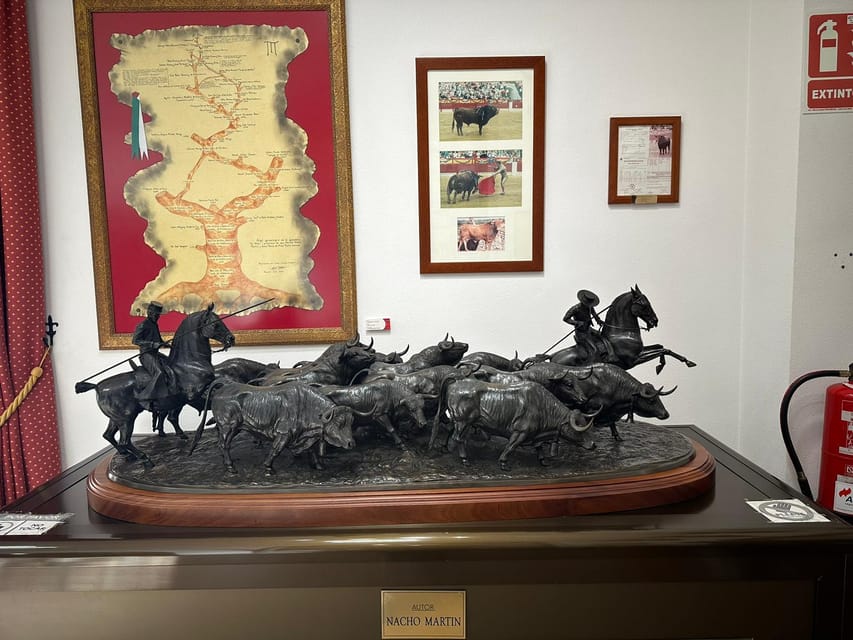
The route also includes the Horse Door, which rounds out the behind-the-scenes logic of how people and horses move through the arena setup. This is the type of detail that can be hard to guess from photos, because it’s about entry and routing rather than appearance.
Then there’s the hands-on part: you can try handling a bullfighting cape. That might sound like a gimmick until you understand what the guide is doing. It becomes an educational moment about the skill, timing, and purpose behind the movements, even if you view the tradition through a critical lens.
I like this aspect because it gives you something physical to connect to the explanation. Instead of only hearing stories, you get a small, guided experience that helps you understand what performers are working with.
Just remember, this is not a stunt lesson. You’re trying the feel and basic handling in an instructional setting, guided by someone who knows how to keep it appropriate for visitors.
A few more Alicante bookings in the same direction

Museum time: history plus the building’s story
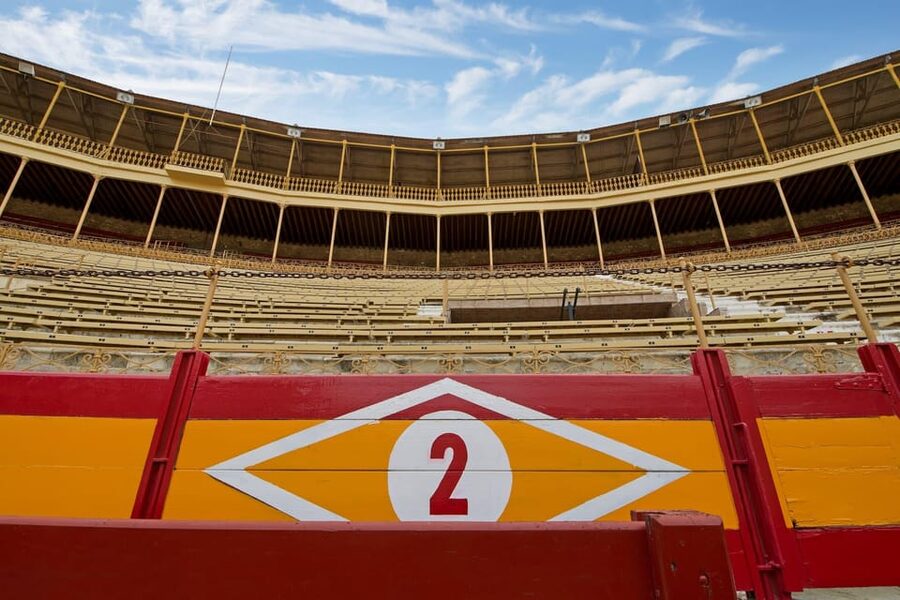
The tour includes the bullfighting museum, and it’s a strong complement to the walking route. When you see the building first, museum objects can feel random. When you visit the museum as part of a guided route, you start recognizing themes: entrances, spaces for preparation, and why the arena has certain architectural priorities.
You’ll learn about the history and the architecture as part of the monument’s story. The key value here is context. The museum helps turn what could be a controversial topic into an organized explanation of cultural heritage, even if you ultimately disagree with the practice.
This is also a good moment to ask questions that you didn’t want to interrupt during the walking segments. Bring up whatever you care about, like terminology, how the event works, or why the city treats this building as significant.
Viewpoint toward the castle: a payoff for your feet
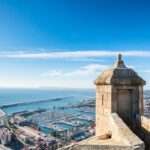
One of the route stops is a panoramic view to the castle. That break matters. After walking through gates and functional areas, you get a visual reset that connects the arena to the city around it.
It’s not just pretty. City views help you understand the arena as a landmark in everyday life, not only a stage for formal events. Standing there, you can picture how people would orient themselves in the past, and why the bullring would be a recognized gathering place.
Price and value: what you get for about $47
At around $47 per person for about 1.5 hours, the value comes from what’s included, not just the guide. Your ticket and entry to the Alicante Bullring and bullfighting museum are included, plus the private guide in your chosen language.
Because it’s a private group, you’re paying for personalization. That matters for a topic with lots of questions. If you’d rather read about the arena on your own, you can likely do it for less money. But if you want explanations while you’re standing in the exact spaces, the guide is where a lot of your money goes.
Skip-the-ticket-line is another practical value point. It saves you time and keeps the start smooth.
Two things you should plan for: there’s no food or drinks included, and there’s no hotel pickup. If you’re taking this on a half-day, just plan a snack and make sure you’re already near Plaza de Espanya when you start.
Who this tour suits best
This experience fits best if you want culture explained in a structured way, not just sightseeing. It’s also ideal if you enjoy asking questions and you like learning by walking through the real spaces.
It’s a good match for couples or small groups who prefer a private format over joining a larger crowd. It also works well for people who are curious about architecture and how buildings support the events they host.
If you are strongly opposed to bullfighting and you worry being in the ring will feel too close, you might want to think carefully. The tour is educational and respectful in tone, but it still takes you into the arena spaces tied to the tradition.
If you’re visiting with limited time, 1.5 hours is a manageable length. You get museum content, arena access, and a viewpoint, without turning your day into a long indoor program.
Should you book the Alicante bullring private guided visit?
I think you should book this tour if you want to understand the Alicante bullring as a functioning historic monument, and you’re happy to learn about bullfighting culture from the inside. The combination of arena access, the museum, and the option to handle a cape gives you more than a standard walk-by visit.
Book it sooner if you care about language support and Q and A time. A private guide makes a difference when you have real questions and you want clear answers while you’re standing in the Door of Triumph, the stands, and the ring.
Pass or consider alternatives if the topic itself is a deal-breaker for you. Because the route includes the ring area, you should assume the experience will not be a distant, purely theoretical look.
If you’re on the fence, here’s my simple checklist: comfortable with learning about a controversial tradition, willing to walk around historic spaces for 1.5 hours, and you want a guide to translate the building into meaning. If those boxes are checked, this is one of the more practical and informative ways to see Alicante’s bullring up close.
FAQ
How long is the Alicante Bullring and Museum private guided visit?
The visit is 1.5 hours.
Where is the meeting point?
You should go to the main door of the Alicante Bullring in Plaza de Espanya.
What time should I arrive?
Arrive about 10 minutes before the start of your visit.
Is it a private group tour?
Yes, it is a private group experience.
What languages are available for the private guide?
The guide is available in English, Spanish, French, Russian, Portuguese, and Italian.
What is included in the price?
The price includes entry tickets to the Alicante Bullring and bullfighting Museum, plus a private guide in your language. A gratuity is also included as 1 gratuity every 10 persons.
Are food and drinks included?
No, food and drinks are not included.
Is there a way to skip the ticket line?
Yes, you can skip the ticket line.
Is the tour wheelchair accessible?
Yes, the tour is wheelchair accessible.
What is the cancellation policy?
Free cancellation is available up to 24 hours in advance for a full refund.
More Guided in Alicante



More Tour Reviews in Alicante




Alicante Beyond the Castle
Newest Alicante write-ups

Alicante Tours, side by side.
 ★ 4.3From Alicante: Roundtrip to Tabarca IslandFrom $283,992 reviews
 ★ 4.8Alicante: Secret Flavors Food TourFrom $341,514 reviews
 ★ 4.5Alicante: 2-Hour Late Afternoon Catamaran CruiseFrom $381,265 reviews
 ★ 4.7From Alicante: Guadalest, Altea & ticket in Algar WaterfallsFrom $441,027 reviews
 ★ 4.8Alicante: Seven Secrets of Alicante Discovery TourFrom $34956 reviews
 ★ 4.6Alicante: 3-Hour Coastal Catamaran CruiseFrom $50953 reviews
 ★ 4.7From Alicante/Benidorm: Guadalest & Algar Waterfalls TourFrom $53912 reviews
 ★ 4.7Alicante: 6-Hour Catamaran Cruise to Tabarca IslandFrom $85879 reviews
Filed in