
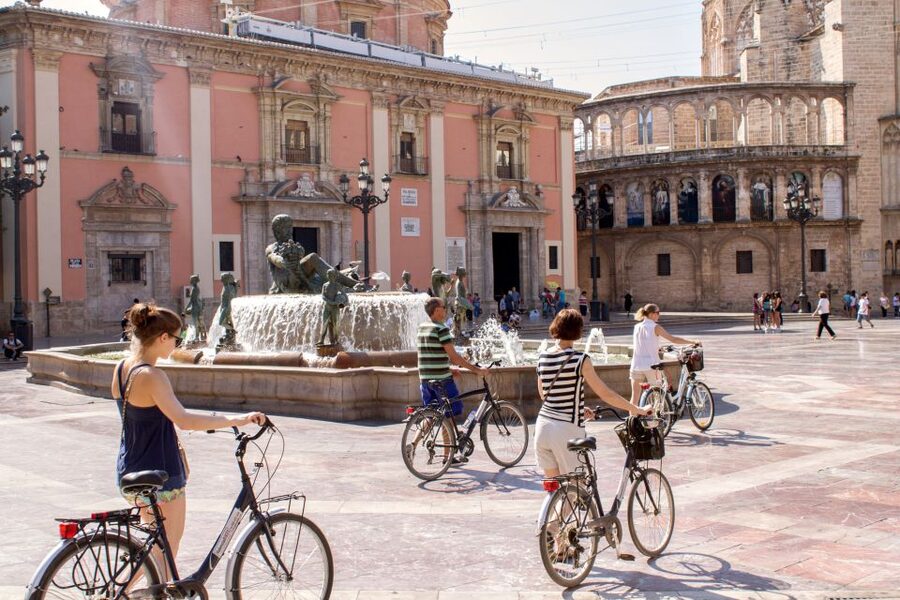
Old town, new town, open sea.
Paella over orange wood out in the Albufera, nine kilometres of park where the river used to run, and the Costa Blanca an hour down the coast. What each trip costs, how long it takes, and where to book it.
Seven to sort before you fly.
The aquarium under Calatrava’s white shells, a paella pan the size of a bike wheel in El Palmar, tapas in an eleventh-century monument off Carrer dels Cavallers, and a catamaran past the breakwater at six.
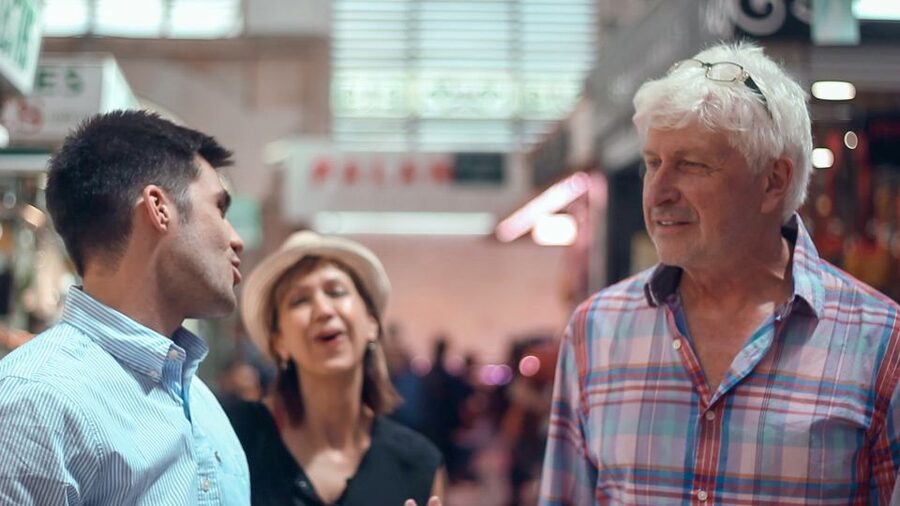
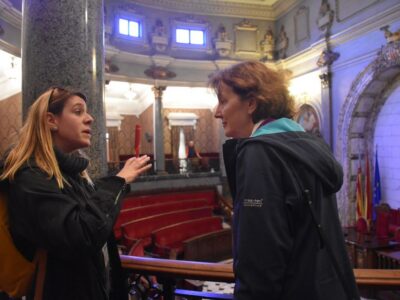
Old Town Tour, Wine & Tapas in an 11th c. Monument
Valencia Old Town on foot then wine and tapas in an 11th-century monument. 4 hours of story, paella, and paired wines.
From $94 per person
Read the review → ★ 3.9Books out first24 or 48-Hour Hop-on Hop-off Bus TicketFrom $315,611 reviews
 ★ 4.3Easy yesFrom Alicante: Roundtrip to Tabarca IslandFrom $283,992 reviews
 ★ 4.8Locals send friends herePalosanto Flamenco Show TicketFrom $253,876 reviews
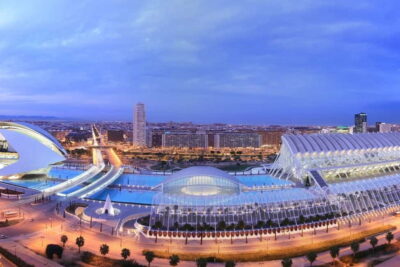 ★ 4.4Worth the eurosOceanogràfic, Hemisfèric & Science Museum ComboFrom $542,959 reviews
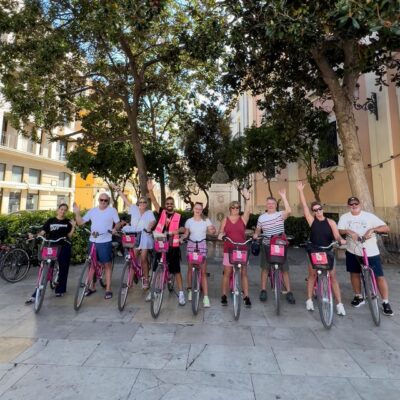 ★ 4.7Good first bookingCity Highlights Guided Bike TourFrom $262,373 reviews
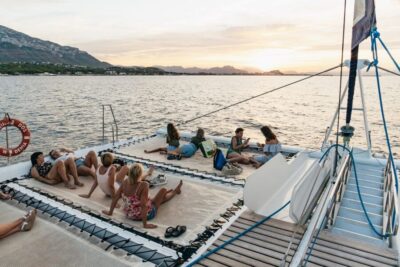
 ★ 3.9Fills up in AugustSunset or Daytime Catamaran Cruise with DrinkFrom $182,201 reviews
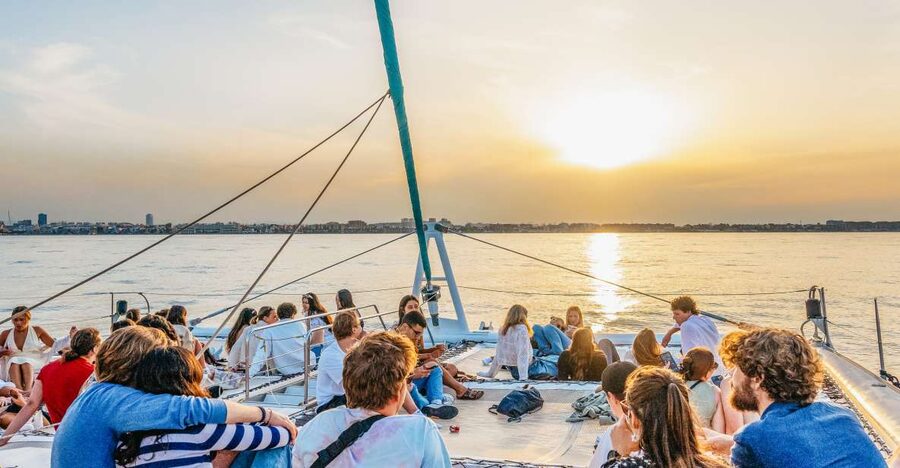
The sea is ten minutes from the cathedral.
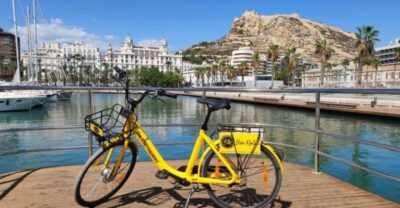
Tram 4 runs from the old town out to Las Arenas in twenty minutes, and the marina built for the America’s Cup still fills with boats that will take you out. Catamarans leave at six for the sunset run, swim stops sit off the Malvarrosa, and further south the water goes green over the sand at Cala Granadella.
Which paella day is yours?
Valencia invented the dish and is particular about it. Three ways to get it right, depending on whether you want to cook it, eat it where the rice is grown, or shop for it first.
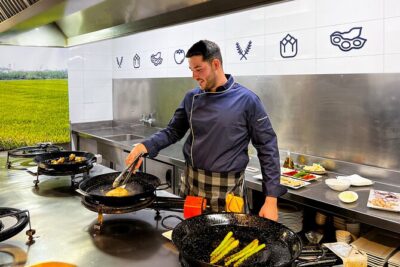 Apron on
The cooking class
4 hours (approx.) · from $84 · 1,150 reviews
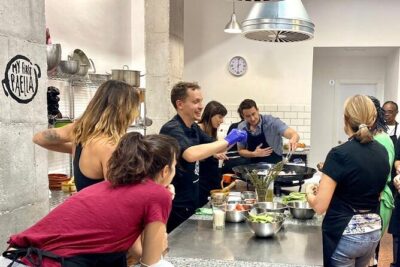
A morning in a kitchen with a paellera the width of a bike wheel, orange wood in the burner and a chef who will stop you the second you reach for chorizo. Rice, rabbit, garrofó beans, and the socarrat scraped off the bottom at the end. You eat what you cooked, usually with a jug of something you also made.
Compare the cooking classes →
Apron on
The cooking class
4 hours (approx.) · from $84 · 1,150 reviews
A morning in a kitchen with a paellera the width of a bike wheel, orange wood in the burner and a chef who will stop you the second you reach for chorizo. Rice, rabbit, garrofó beans, and the socarrat scraped off the bottom at the end. You eat what you cooked, usually with a jug of something you also made.
Compare the cooking classes →
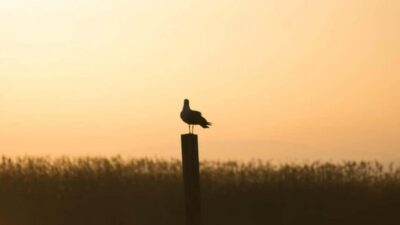 Where the rice grows
The Albufera day
from $55 · 556 reviews
Twenty minutes south the city stops and the paddy fields start. A flat-bottomed boat crosses the lagoon, a thatched barraca explains how people lived out here, and lunch in El Palmar comes from kitchens whose grandparents grew the rice. Take the late slot and the sunset does the rest.
See the Albufera trips →
Shop first, cook after
The market run
4 hours (approx.) · from $84 · 1,150 reviews
The Mercado Central is a modernista hall with eight hundred stalls under stained glass, and the better classes start there with an empty basket. You choose the rabbit, the beans and the saffron, get told off about the tomatoes, then carry it back to the kitchen. The Ruzafa version is quieter and just as good.
Browse the market tours →
Where the rice grows
The Albufera day
from $55 · 556 reviews
Twenty minutes south the city stops and the paddy fields start. A flat-bottomed boat crosses the lagoon, a thatched barraca explains how people lived out here, and lunch in El Palmar comes from kitchens whose grandparents grew the rice. Take the late slot and the sunset does the rest.
See the Albufera trips →
Shop first, cook after
The market run
4 hours (approx.) · from $84 · 1,150 reviews
The Mercado Central is a modernista hall with eight hundred stalls under stained glass, and the better classes start there with an empty basket. You choose the rabbit, the beans and the saffron, get told off about the tomatoes, then carry it back to the kitchen. The Ruzafa version is quieter and just as good.
Browse the market tours →
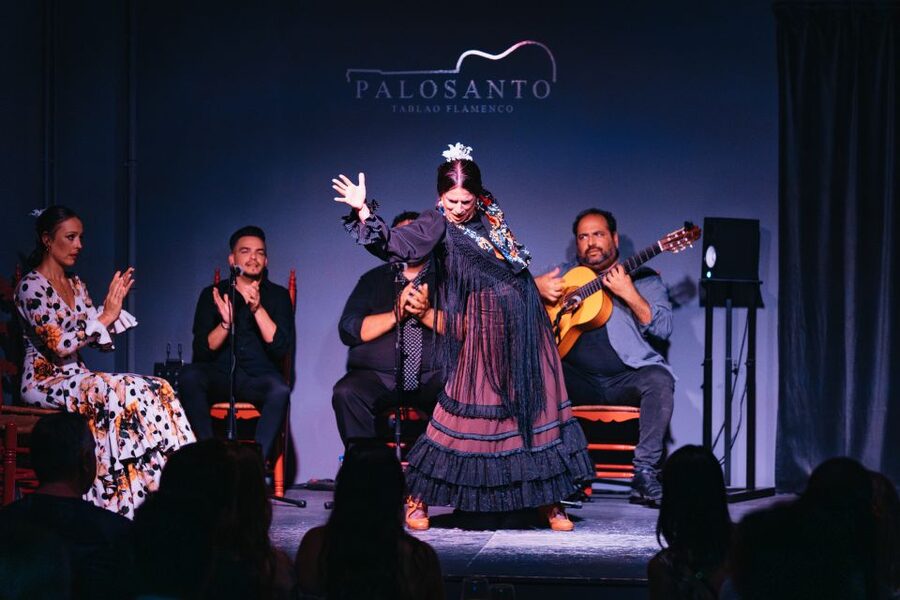
The city gets going late.
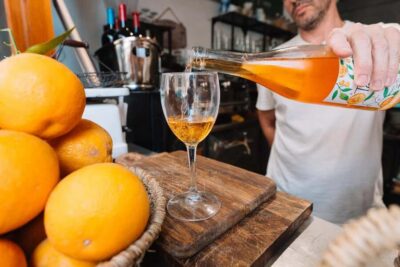
Dinner does not start until half past nine and nobody is rushing it. Flamenco in a converted palace near the bullring, agua de Valencia in the Barrio del Carmen, and terraces in Ruzafa that only fill up once the rest of Europe has gone to bed.
Lunch is the serious meal.
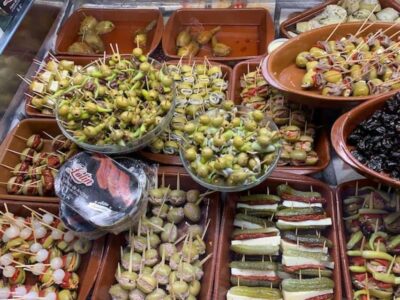
Two in the afternoon, three courses, nobody checking a watch. Esgarraet and clotxinas before the rice arrives, and horchata with fartons somewhere around six to keep you going until dinner.
They turned the river into a park.
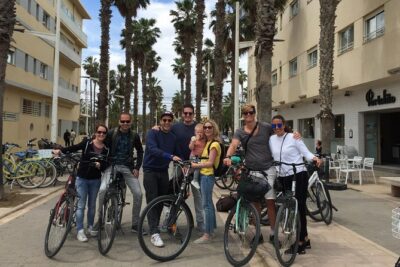
After the 1957 flood the Turia was diverted around the city and the old bed became gardens the whole way through. Flat, shaded and free of cars, which is why Valencia rides more than it drives.
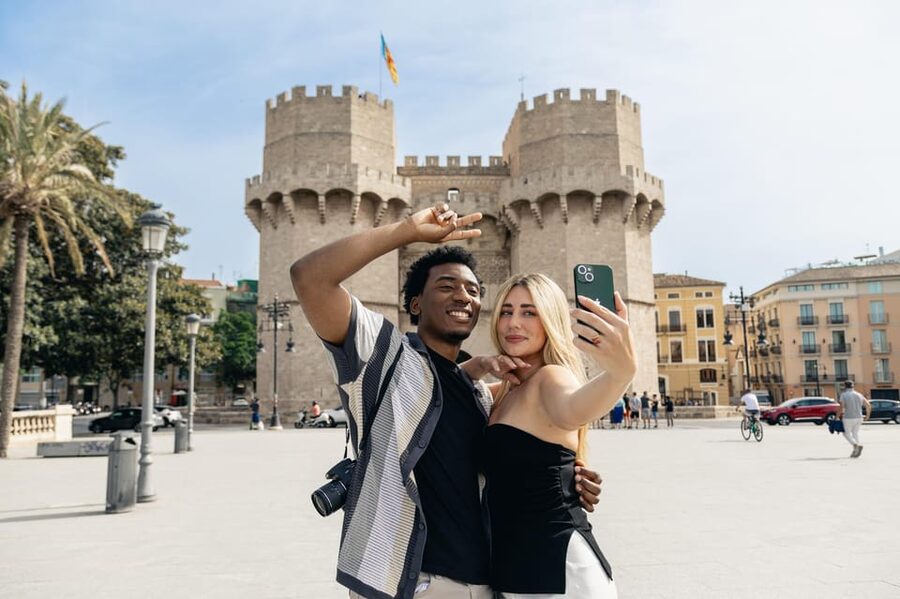
The Holy Grail sits in a side chapel.
Valencia keeps its cathedral chalice in a quiet room off the nave and barely makes a fuss about it. Outside, the Lonja de la Seda still has the twisted stone columns the silk traders paid for, San Nicolás is painted from floor to vault, and the whole quarter is small enough to walk before lunch.
Valencia works barrio by barrio.
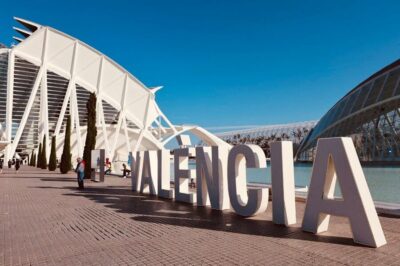
El Carmen for the crooked streets. Ruzafa for the terraces. The old riverbed for the ride out to Calatrava’s white shells, and the lagoon twenty minutes past that.
Pick the kind of day, not the tour.
Twelve doors into the same stretch of coast. Pick the one that sounds like you and everything behind it is priced, timed and rated.

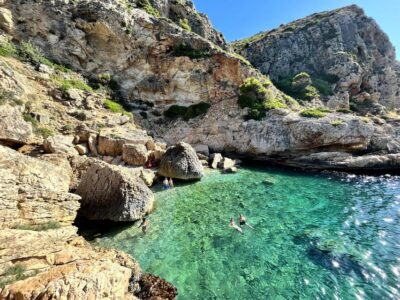
An hour south, everything changes.
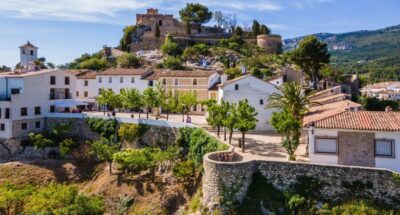
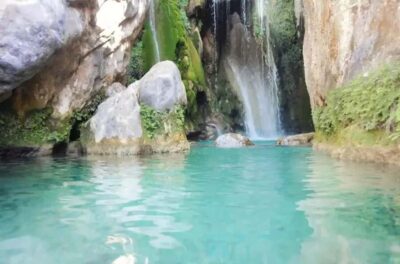
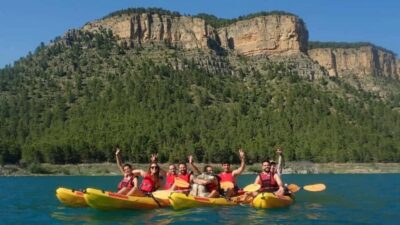
Castles on hills, waterfalls running through the pine, coves you can only reach by kayak, and thermal pools up in the Castellón hills if you go the other way instead.
Three days in the right order.
Nobody covers the whole Valencian Community in one trip. Do it in this sequence and you get the city, the water and the rice fields without crossing your own path.
 Day 1
Ciutat Vella at walking pace
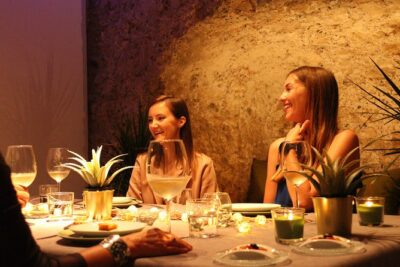
Mercado Central at nine while the stalls are still being stacked, horchata and fartons across the square, the cathedral chalice, then tapas along Carrer dels Cavallers until the light goes.
Plan day one →
Day 1
Ciutat Vella at walking pace
Mercado Central at nine while the stalls are still being stacked, horchata and fartons across the square, the cathedral chalice, then tapas along Carrer dels Cavallers until the light goes.
Plan day one →
 Day 2
White shells, then the beach
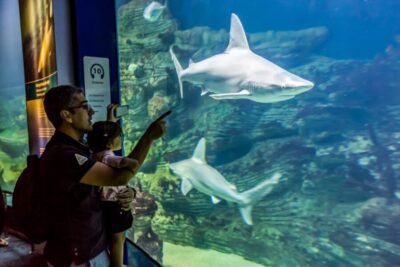
Ride the riverbed out to the Ciudad de las Artes, give the Oceanogràfic a whole morning, then keep going to Malvarrosa for rice by the sea and a swim before dinner.
Plan day two →
Day 3
South to the rice fields
A boat across the Albufera, a barraca with a thatched roof, and paella in El Palmar cooked where the rice was grown. Book the late slot and let the sunset finish the trip.
Plan day three →
Day 2
White shells, then the beach
Ride the riverbed out to the Ciudad de las Artes, give the Oceanogràfic a whole morning, then keep going to Malvarrosa for rice by the sea and a swim before dinner.
Plan day two →
Day 3
South to the rice fields
A boat across the Albufera, a barraca with a thatched roof, and paella in El Palmar cooked where the rice was grown. Book the late slot and let the sunset finish the trip.
Plan day three →
Latest from Valencia and the Costa Blanca.
 ★ 5.0Photo shooting at the beach with pro photographerFrom $2123 reviews
 ★ 4.5Cano-RaftingFrom $663 reviews
 ★ 5.0Fantastic Bike Tour of Valencia in ItalianFrom $283 reviews
 ★ 5.0Mystical Journey of Spirit and SecretsFrom $1133 reviews
 ★ 4.8Horchata Bike TourFrom $473 reviews
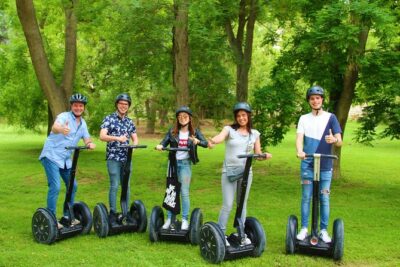
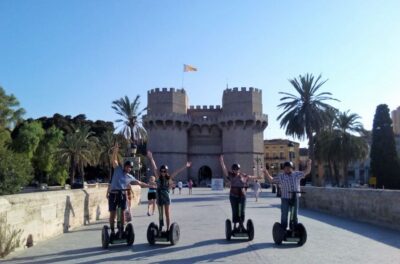
 ★ 5.0Valencia Bike or Segway TourFrom $1973 reviews
 ★ 3.8Guided City Walking Tour with Tapas TastingsFrom $1613 reviews
 ★ 5.0Granadella-Moraig: Full Day Experience by kayak & E-bikeFrom $1243 reviews